Connecticut | Theme

Declaration

Interviewees:
  • Natalie Belanger
    • Public Programs Manager, Connecticut Museum of Culture and History
  • Katherine Hermes
    • Professor Emeritus, Central Connecticut State University
    • Publisher of Connecticut Explored

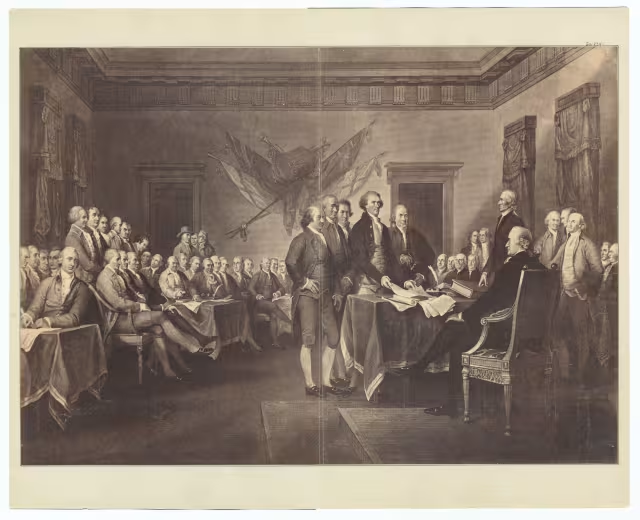
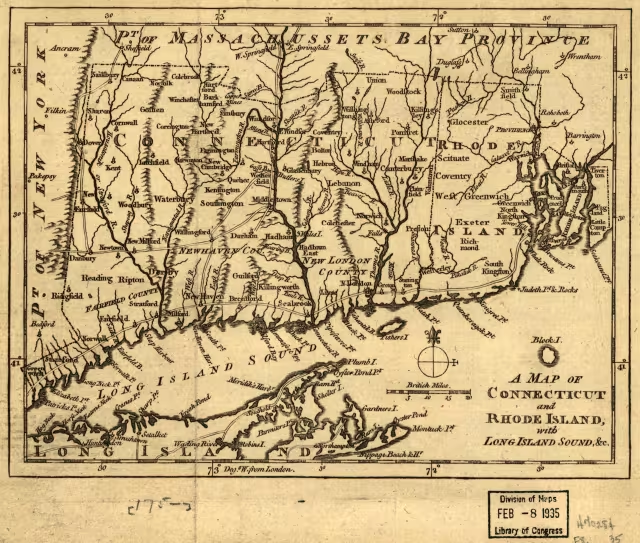
The Declaration arrived in Connecticut without great fanfare, largely because the colony had already decided in favor of independence. Connecticut's General Assembly had instructed its delegates on June 14, 1776 to support a declaration of independence from Britain and the formation of a confederacy, while insisting its powers be strictly limited to military and foreign affairs. The Hartford Courant printed the document on its second page about a week after signing, with minimal commentary. The colony's religious geography shaped reception. East of the Connecticut River, where Congregationalism was strongest, people had been ready for independence for some time. West of the river, closer to New York, the Church of England had more adherents and the response was more tepid. Around 1776, Black Connecticans began taking names like Liberty, Freedom, and Freeman—a form of personal declaration. One enslaved man whose Loyalist enslaver fled the colony petitioned the General Assembly for his freedom and was granted it.
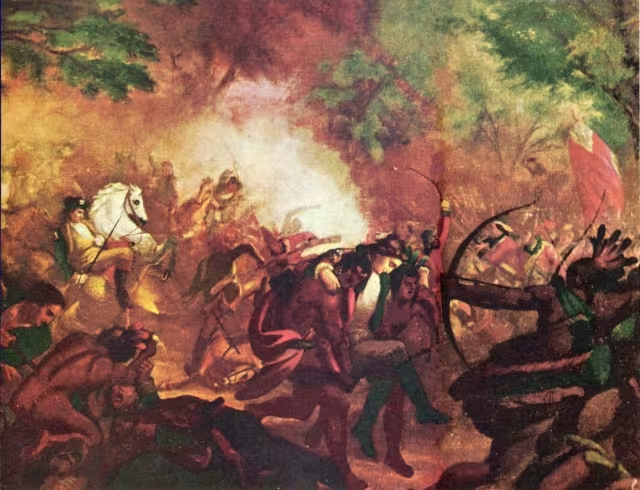
Connecticut's fierce commitment to independence sprang from its cherished 1662 charter, which granted an elected governor and an independent judiciary. On June 14, 1776, the Connecticut General Assembly met in Hartford and passed its own resolution for independence. Governor Jonathan Trumbull Sr. was the only colonial governor to back the Patriot cause throughout the entire Revolutionary War. During the war, Connecticut’s farm economy pivoted to supplying the Continental Army, earning the nickname “the Provisions State.” Four Connecticut delegates to the Continental Congress signed the Declaration of Independence, including Roger Sherman, the only founder to sign all four foundational documents. High literacy allowed women like Hannah Bunce Watson, who ran a pro-Revolution newspaper, to create a rich documentary record. African Americans took names like Freedom and Liberty and sued for their freedom, and the state's Native peoples—among the most enthusiastic Patriots—served in the military in large numbers, yet lost reservation lands after the war.

More Declaration themes

View details
  • Delaware

    Declaration

    19:52 Just watched
  • Georgia

    Declaration

    26:32 Just watched
  • Maryland

    Declaration

    7:31 Just watched
  • Massachusetts

    Declaration

    9:20 Just watched
  • New Hampshire

    Declaration

    12:50 Just watched
  • New Jersey

    Declaration

    11:53 Just watched
  • New York

    Declaration

    13:22 Just watched
  • North Carolina

    Declaration

    5:54 Just watched
  • Pennsylvania

    Declaration

    23:24 Just watched
  • Rhode Island

    Declaration

    7:42 Just watched
  • South Carolina

    Declaration

    7:26 Just watched
  • Virginia

    Declaration

    23:28 Just watched

More from Connecticut

View details
  • Connecticut

    Context

    8:23 Just watched
  • Connecticut

    Memory

    12:04 Just watched
  • Connecticut

    African Americans

    4:57 Just watched
  • Connecticut

    Elected officials

    6:28 Just watched
  • Connecticut

    Indigenous people

    10:58 Just watched
  • Connecticut

    Loyalists

    3:53 Just watched
  • Connecticut

    Women

    6:18 Just watched
  • Connecticut
  • Delaware
  • Georgia
  • Maryland
  • Massachusetts
  • New Hampshire
  • New Jersey
  • New York
  • North Carolina
  • Pennsylvania
  • Rhode Island
  • South Carolina
  • Virginia

Perspectives

  • Women
  • African Americans
  • Loyalists
  • Indigenous people
  • Elected officials

About

How was national independence anticipated, debated, and enacted in each of the original 13 states during the American Revolution?

How has national independence, particularly the ideas articulated in the Declaration of Independence, been remembered and invoked over the last 250 years?

Learn more

Bookmarks

    No bookmarks yet. Bookmark a video to save it here.

    0