Delaware | Theme

Declaration

Interviewees:
  • Charles Fithian
    • Delaware Archeologist, Delaware Historical Society
  • Joseph Sullivan
    • Welcome Center Supervisor, Delaware Public Archives

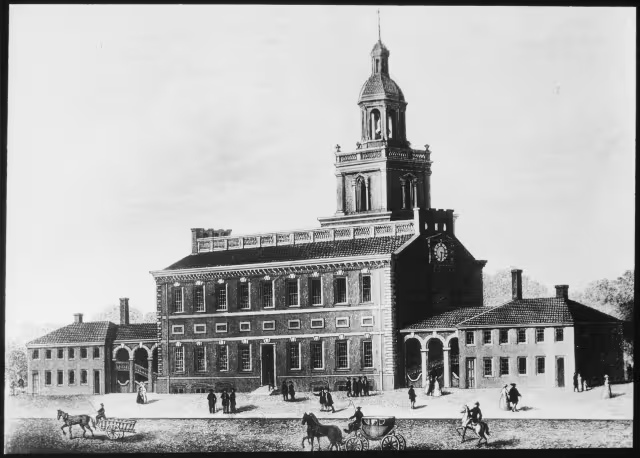
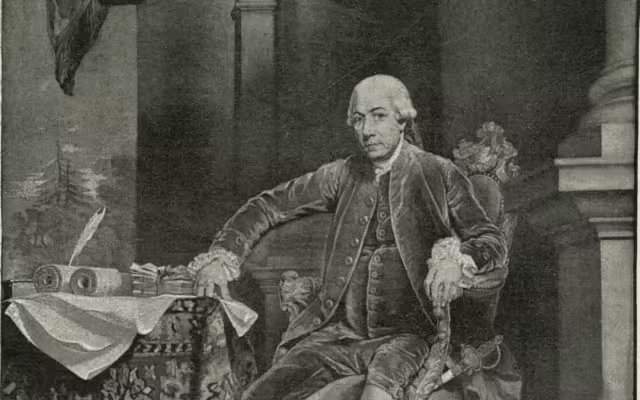
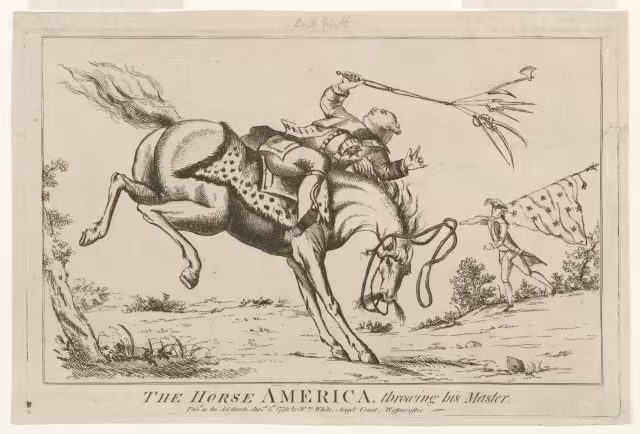
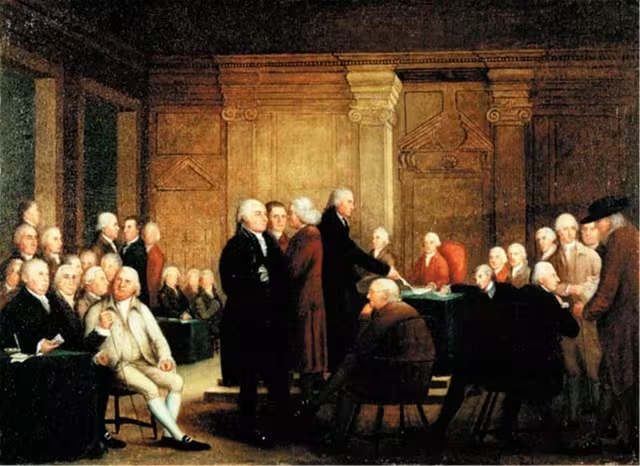
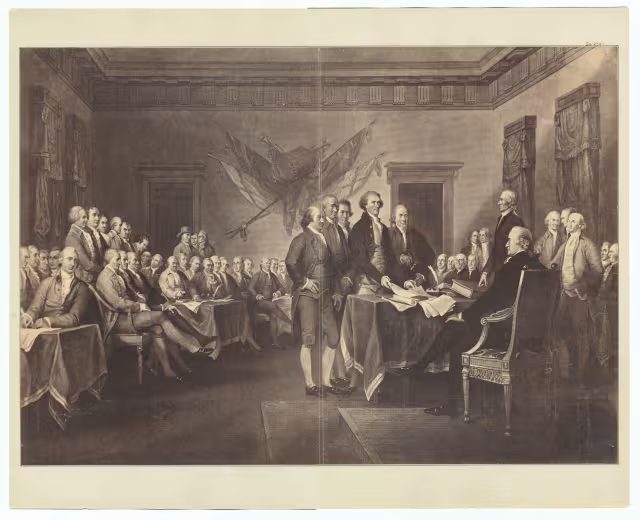
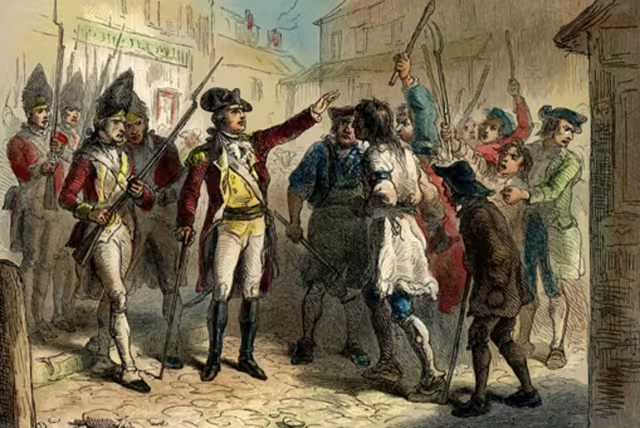
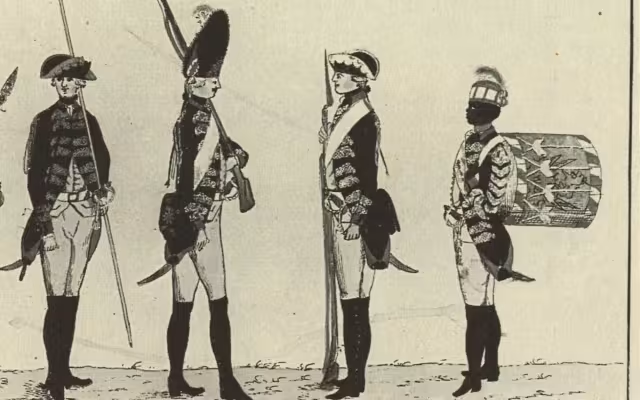
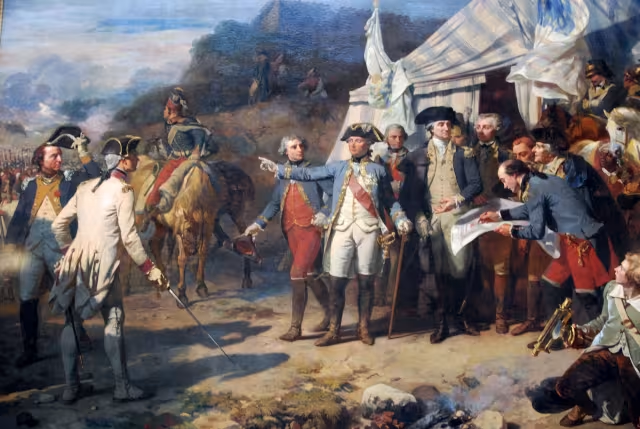
The Declaration of Independence was read in all of Delaware's major towns, and the portrait of King George was publicly burned. But Delaware's leaders were already in motion before it arrived. John Dickinson had articulated the colonies’ grievances in Letters from a Farmer in Pennsylvania, published during the late 1760s. The committees of correspondence had been building toward this moment since at least 1774, when they framed aid to besieged Boston as a common cause of America. The Declaration thus reached a population both energized and challenged. The Delaware Regiment, authorized by Congress in December 1775, had grown to nearly full strength of five to six hundred men by April 1776. Yet Loyalist opposition was immediate. Enoch Anderson, a young Delaware officer, encountered armed Loyalists on the roads out of Dover within days of the Declaration's reading.
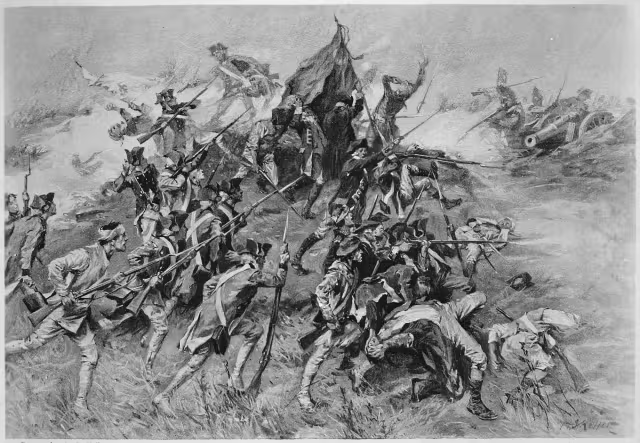
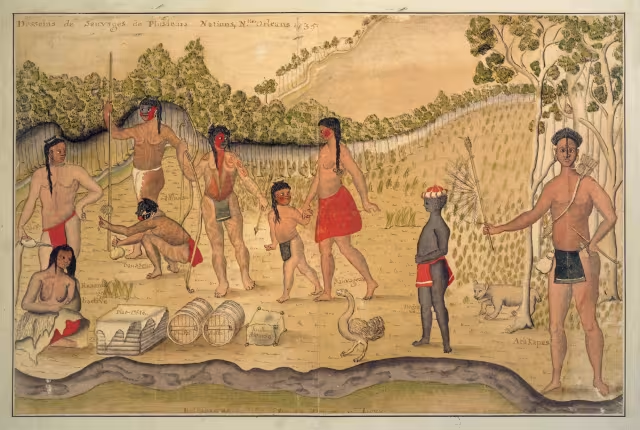
Delaware was a small but culturally layered colony—settled in turn by the Dutch, Swedish, and English—that had to declare independence twice, separating first from Pennsylvania in June 1776 and then from Britain weeks later. Loyalism ran deep and was never fully suppressed, erupting in uprisings like the Black Camp Rebellion and making the conflict a genuine civil war within many communities. Delaware's leaders—Caesar Rodney, George Read, Thomas McKean, and John Dickinson—often served without pay while building a new state. Women nursed soldiers, sewed uniforms, with many following the Delaware Regiment during the Revolutionary War. In some instances, their contributions were recorded by name.  Men of color served throughout the war despite no promise of freedom. The Revolutionary history of the Lenape and Nanticoke nations is poorly documented, and scholars are still at work trying to better understand the war’s impact on them.

More Declaration themes

View details
  • Connecticut

    Declaration

    8:48 Just watched
  • Georgia

    Declaration

    26:32 Just watched
  • Maryland

    Declaration

    7:31 Just watched
  • Massachusetts

    Declaration

    9:20 Just watched
  • New Hampshire

    Declaration

    12:50 Just watched
  • New Jersey

    Declaration

    11:53 Just watched
  • New York

    Declaration

    13:22 Just watched
  • North Carolina

    Declaration

    5:54 Just watched
  • Pennsylvania

    Declaration

    23:24 Just watched
  • Rhode Island

    Declaration

    7:42 Just watched
  • South Carolina

    Declaration

    7:26 Just watched
  • Virginia

    Declaration

    23:28 Just watched

More from Delaware

View details
  • Delaware

    Context

    6:06 Just watched
  • Delaware

    Memory

    9:45 Just watched
  • Delaware

    African Americans

    5:52 Just watched
  • Delaware

    Elected officials

    12:52 Just watched
  • Delaware

    Indigenous people

    3:11 Just watched
  • Delaware

    Loyalists

    7:56 Just watched
  • Delaware

    Women

    6:16 Just watched
  • Connecticut
  • Delaware
  • Georgia
  • Maryland
  • Massachusetts
  • New Hampshire
  • New Jersey
  • New York
  • North Carolina
  • Pennsylvania
  • Rhode Island
  • South Carolina
  • Virginia

Perspectives

  • Women
  • African Americans
  • Loyalists
  • Indigenous people
  • Elected officials

About

How was national independence anticipated, debated, and enacted in each of the original 13 states during the American Revolution?

How has national independence, particularly the ideas articulated in the Declaration of Independence, been remembered and invoked over the last 250 years?

Learn more

Bookmarks

    No bookmarks yet. Bookmark a video to save it here.

    0