North Carolina | Theme

Declaration

Interviewees:
  • Sally Bloom
    • Curator of Distance Education, North Carolina Museum of History

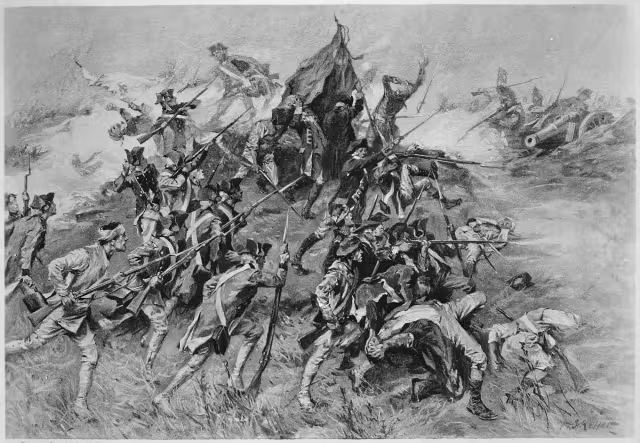
After learning of the Continental Congress's vote, North Carolina's Provincial Council of Safety resolved on July 22, 1776, that the Declaration be "proclaimed in the most public manner" by committees of safety statewide. On July 27, it scheduled a public reading in Halifax for August 1, and on August 6 appointed two militia colonels to read the Declaration in Cumberland County, home to many Highland Scots Loyalists, with specific instructions to convey Congress's treason resolves. On August 9 the Council formally recognized North Carolina as an independent state. It is worth noting the Patriot victory at Moores Creek Bridge in February of 1776 was a crucial moment in building solidarity in North Carolina around the prospect of state and national independence.
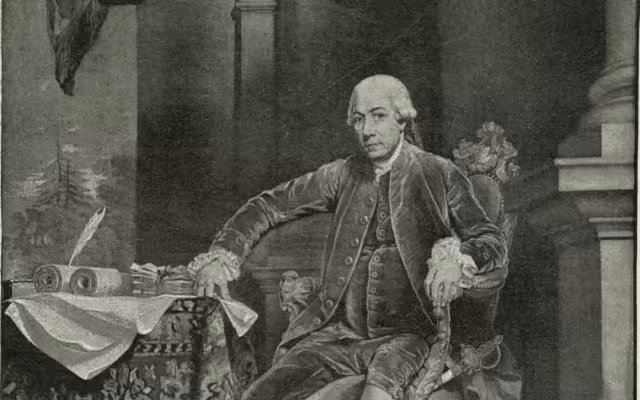
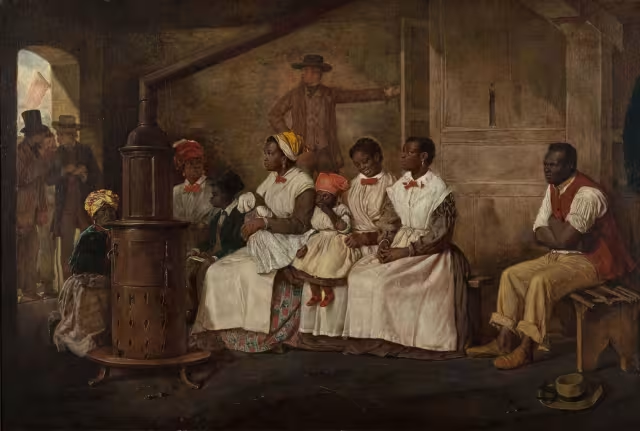
By the 1770s North Carolina was home to roughly 300,000 people of diverse backgrounds. After Congress voted for independence, the Provincial Council of Safety ordered the Declaration proclaimed across the state and formally recognized North Carolina as independent in August 1776. Its three signers—Joseph Hewes, John Penn, and William Hooper—were all enslavers, in contradiction to the liberty they proclaimed. The state was divided: by default, most residents of European background were loyal to the King. Over time, most individuals, families, and communities chose or were required to choose positions regarding the growing opposition to British rule. Highland Scots in the backcountry were called out for their oaths of loyalty to the Crown. Women like Penelope Barker asserted themselves politically, hundreds of men of color served the Patriot cause, and the Cherokee resisted settler encroachment, while the Catawba allied with the Patriots. North Carolina proudly asserts its claim to “First in Freedom,” because of an early Revolutionary milestone, the Halifax Resolves.

More Declaration themes

View details
  • Connecticut

    Declaration

    8:48 Just watched
  • Delaware

    Declaration

    19:52 Just watched
  • Georgia

    Declaration

    26:32 Just watched
  • Maryland

    Declaration

    7:31 Just watched
  • Massachusetts

    Declaration

    9:20 Just watched
  • New Hampshire

    Declaration

    12:50 Just watched
  • New Jersey

    Declaration

    11:53 Just watched
  • New York

    Declaration

    13:22 Just watched
  • Pennsylvania

    Declaration

    23:24 Just watched
  • Rhode Island

    Declaration

    7:42 Just watched
  • South Carolina

    Declaration

    7:26 Just watched
  • Virginia

    Declaration

    23:28 Just watched

More from North Carolina

View details
  • North Carolina

    Context

    13:02 Just watched
  • North Carolina

    Memory

    12:13 Just watched
  • North Carolina

    African Americans

    4:29 Just watched
  • North Carolina

    Elected officials

    4:36 Just watched
  • North Carolina

    Indigenous people

    4:28 Just watched
  • North Carolina

    Loyalists

    4:56 Just watched
  • North Carolina

    Women

    5:33 Just watched
  • Connecticut
  • Delaware
  • Georgia
  • Maryland
  • Massachusetts
  • New Hampshire
  • New Jersey
  • New York
  • North Carolina
  • Pennsylvania
  • Rhode Island
  • South Carolina
  • Virginia

Perspectives

  • Women
  • African Americans
  • Loyalists
  • Indigenous people
  • Elected officials

About

How was national independence anticipated, debated, and enacted in each of the original 13 states during the American Revolution?

How has national independence, particularly the ideas articulated in the Declaration of Independence, been remembered and invoked over the last 250 years?

Learn more

Bookmarks

    No bookmarks yet. Bookmark a video to save it here.

    0