South Carolina | Theme

Declaration

Interviewees:
  • Annette Guild
    • Metadata Specialist, South Carolina Historical Society
  • Melina Testin
    • Education Coordinator, South Carolina Historical Society

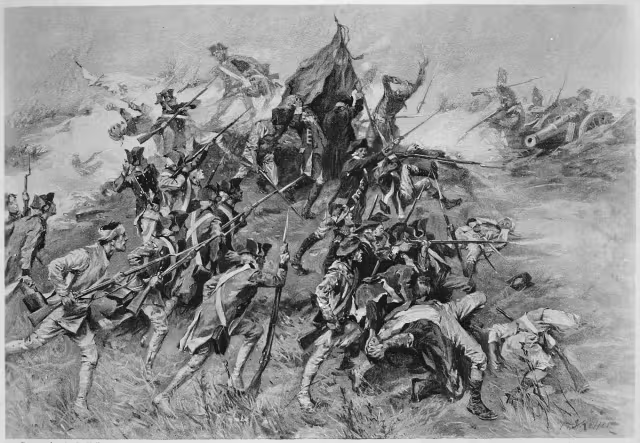
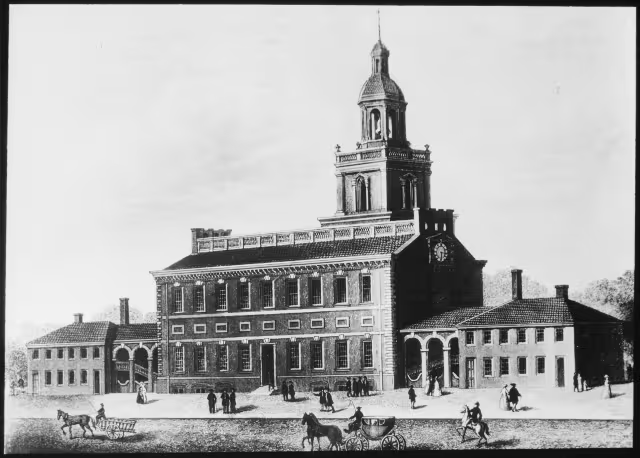
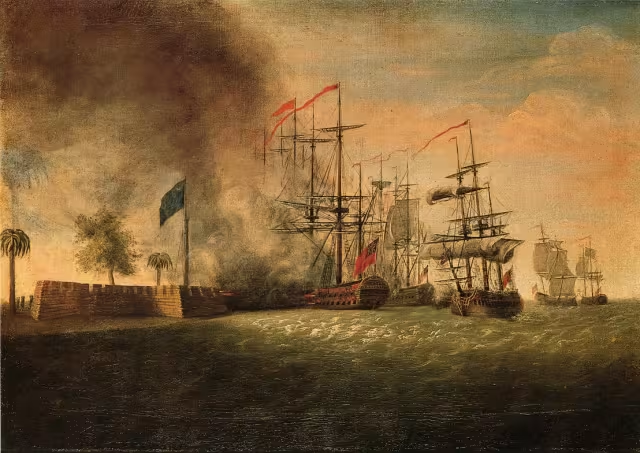
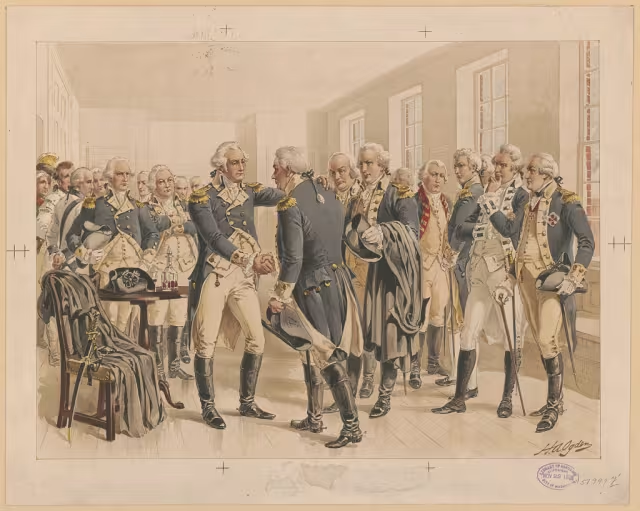
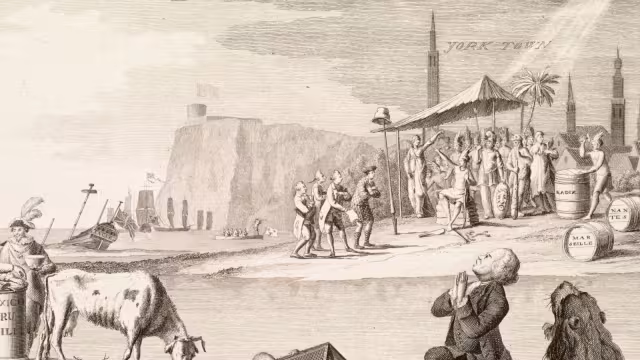
South Carolina was already ahead of the wave on independence by the time the Declaration arrived. The state had passed its own constitution in March 1776, elected John Rutledge as its first president, and built its own government. One week before the Declaration was signed, on June 28, 1776, the British failed in their first attempt to capture Charleston. At the Battle of Sullivan’s Island, American forces held off the British navy for over nine hours when cannonballs could not penetrate the Patriot fort built of palmetto trees. The British fleet then lingered off the coast, so the Declaration came overland by courier and reached Charleston on August 2, 1776. President Rutledge had it read publicly three times on August 5—at the State House, the Exchange Building, and under the Liberty Tree—as well as to the troops at Fort Johnson and Fort Sullivan. Charleston printer Peter Timothy printed it. He was later arrested by the British and died as a prisoner of war.
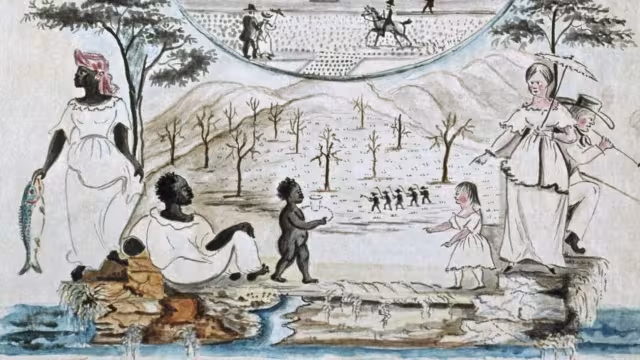
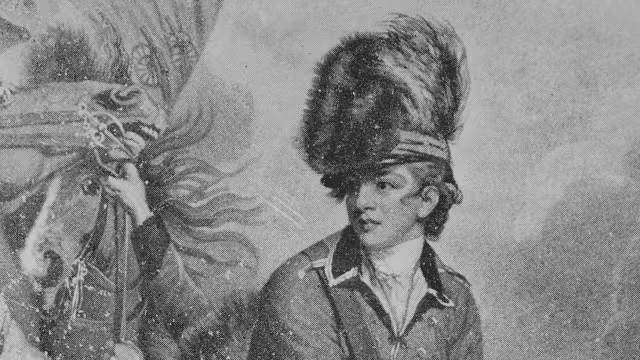
South Carolina was among the wealthiest of the thirteen colonies and the only one where enslaved Black people formed a majority, producing an extraordinarily stratified society divided between Low Country planters and a poorer, marginalized backcountry. It moved toward independence early, building a shadow government and adopting its own constitution in March 1776, months before the Declaration arrived. During the week before the Continental Congress approved the Declaration, Patriots had repelled the British navy at the Battle of Sullivan's Island—still commemorated as Carolina Day. As in many colonies, the Revolution in South Carolina looked as much like a civil war as a war for independence. Roughly a quarter of white residents actively opposed it, and Loyalists fought neighbors at Kings Mountain and Cowpens. Few states saw more battles or greater upheaval. Elite women left a rich documentary record illuminating the complexities of their wartime lives. Throughout the war, Catawba, Cherokee, and Creek struggled with complicated diplomatic choices. In 1782, roughly 5,000 formerly enslaved South Carolinians departed with the British.

More Declaration themes

View details
  • Connecticut

    Declaration

    8:48 Just watched
  • Delaware

    Declaration

    19:52 Just watched
  • Georgia

    Declaration

    26:32 Just watched
  • Maryland

    Declaration

    7:31 Just watched
  • Massachusetts

    Declaration

    9:20 Just watched
  • New Hampshire

    Declaration

    12:50 Just watched
  • New Jersey

    Declaration

    11:53 Just watched
  • New York

    Declaration

    13:22 Just watched
  • North Carolina

    Declaration

    5:54 Just watched
  • Pennsylvania

    Declaration

    23:24 Just watched
  • Rhode Island

    Declaration

    7:42 Just watched
  • Virginia

    Declaration

    23:28 Just watched

More from South Carolina

View details
  • South Carolina

    Context

    24:24 Just watched
  • South Carolina

    Memory

    6:20 Just watched
  • South Carolina

    African Americans

    4:19 Just watched
  • South Carolina

    Elected officials

    3:52 Just watched
  • South Carolina

    Indigenous people

    2:58 Just watched
  • South Carolina

    Loyalists

    5:49 Just watched
  • South Carolina

    Women

    Just watched
  • Connecticut
  • Delaware
  • Georgia
  • Maryland
  • Massachusetts
  • New Hampshire
  • New Jersey
  • New York
  • North Carolina
  • Pennsylvania
  • Rhode Island
  • South Carolina
  • Virginia

Perspectives

  • Women
  • African Americans
  • Loyalists
  • Indigenous people
  • Elected officials

About

How was national independence anticipated, debated, and enacted in each of the original 13 states during the American Revolution?

How has national independence, particularly the ideas articulated in the Declaration of Independence, been remembered and invoked over the last 250 years?

Learn more

Bookmarks

    No bookmarks yet. Bookmark a video to save it here.

    0