South Carolina
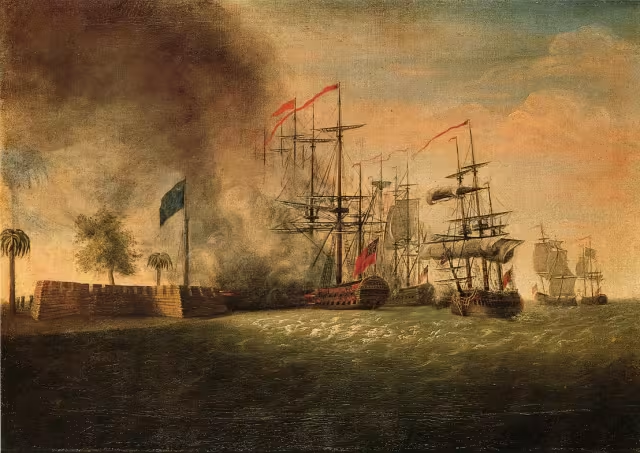
South Carolina was among the wealthiest of the thirteen colonies and the only one where enslaved Black people formed a majority, producing an extraordinarily stratified society divided between Low Country planters and a poorer, marginalized backcountry. It moved toward independence early, building a shadow government and adopting its own constitution in March 1776, months before the Declaration arrived. During the week before the Continental Congress approved the Declaration, Patriots had repelled the British navy at the Battle of Sullivan's Island—still commemorated as Carolina Day. As in many colonies, the Revolution in South Carolina looked as much like a civil war as a war for independence. Roughly a quarter of white residents actively opposed it, and Loyalists fought neighbors at Kings Mountain and Cowpens. Few states saw more battles or greater upheaval. Elite women left a rich documentary record illuminating the complexities of their wartime lives. Throughout the war, Catawba, Cherokee, and Creek struggled with complicated diplomatic choices. In 1782, roughly 5,000 formerly enslaved South Carolinians departed with the British.
- South Carolina
Context
- South Carolina
Declaration
- South Carolina
Memory
- South Carolina
African Americans
- South Carolina
Elected officials
- South Carolina
Indigenous people
- South Carolina
Loyalists
- South Carolina
Women