Perspective
Women
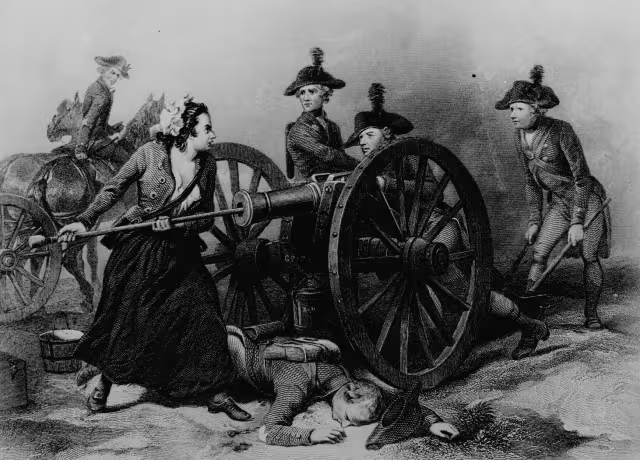
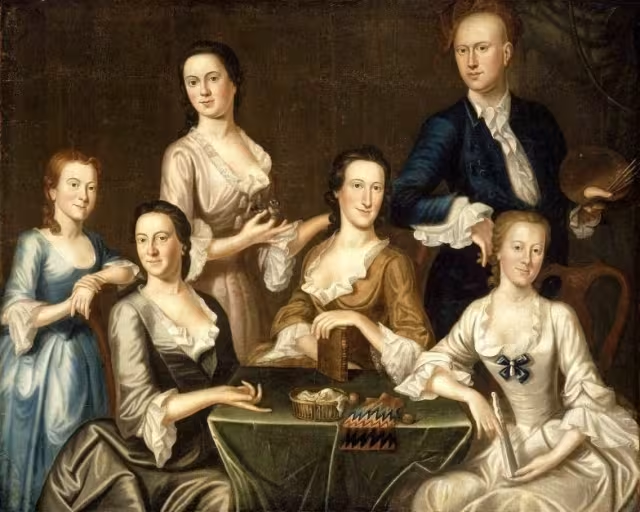
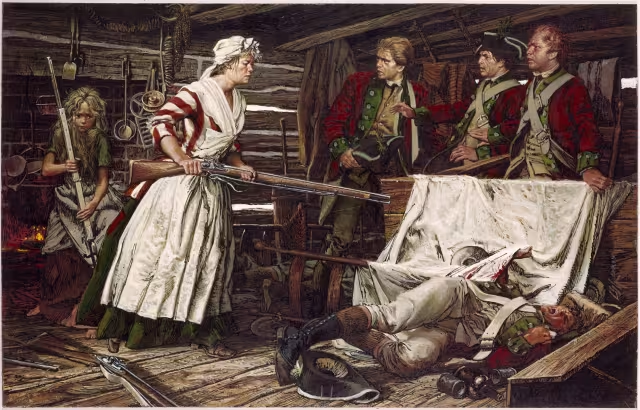
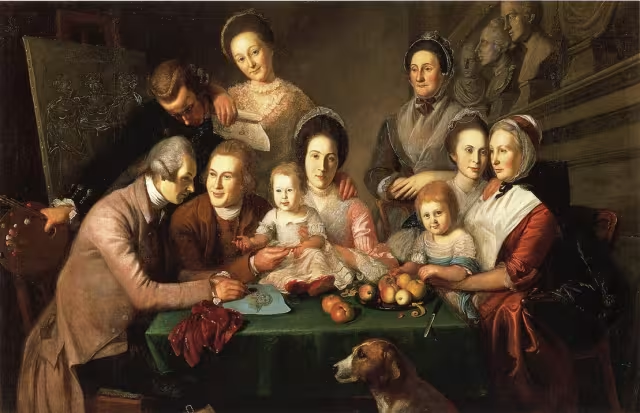
Women across the thirteen colonies occupied a complicated position in the Revolutionary era. Although generally excluded from formal political life, legally subordinate under coverture, they were indispensable to the Patriot cause and in various instances wielded significant political influence. Maryland's Mary Katharine Goddard printed the first version of the Declaration to include all signers' names, affixing her own name as printer in an act that could have been prosecuted as treason. North Carolina's Penelope Barker organized fifty-one women to sign the Edenton Tea Party Resolves in 1774, widely considered the first organized political action by women in the colonies. Connecticut's women sustained the "Provision State" through the war, their farm and textile labor the foundation of the Continental Army's supply.
The Revolution also drew women into political confrontations they had not sought. Virginia's Mary Willing Byrd was accused of Loyalism after British troops camped on her plantation and ordered to trial, though never tried. North Carolina's Jane Spurgeon petitioned the General Assembly three times for title to her home after her Loyalist husband abandoned the family for Canada, asserting the "common rights of citizens"—a radical claim for a woman of that era. Delaware's state government documented women's contributions by name—nurses, uniform-makers, camp followers who marched south with the Continental Army—and actively tracked down widows to ensure they received their half-pay entitlements.
In state after state, the Revolution created new forms of female agency while leaving the political structures that excluded women largely untouched.
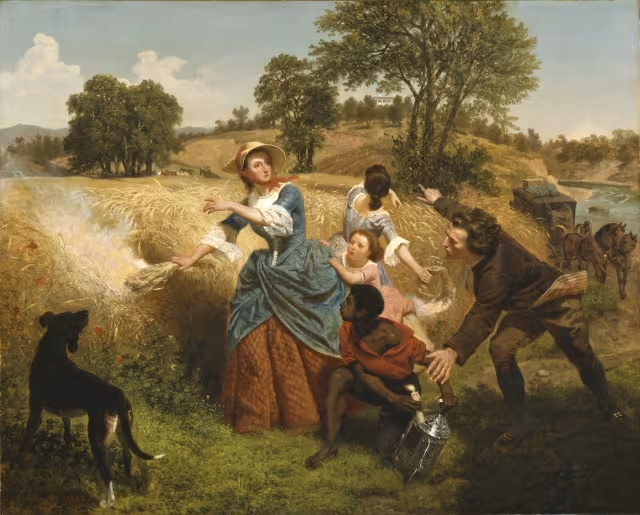
Image source: “Mrs. Schuyler Burning Her Wheat Fields on the Approach of the British,” by Emanuel Gottlieb Leutze (1852), Los Angeles County Museum of Art, Bicentennial gift of Mr. and Mrs. J. M. Schaaf, Mr. and Mrs. William D. Witherspoon, Mr. and Mrs. Charles C. Shoemaker, and Jo Ann and Julian Ganz, Jr., photo © Museum Associates/LACMA.