Massachusetts | Perspective

Women

Interviewees:
  • Miriam Liebman
    • Assistant Editor, The Adams Papers, Massachusetts Historical Society

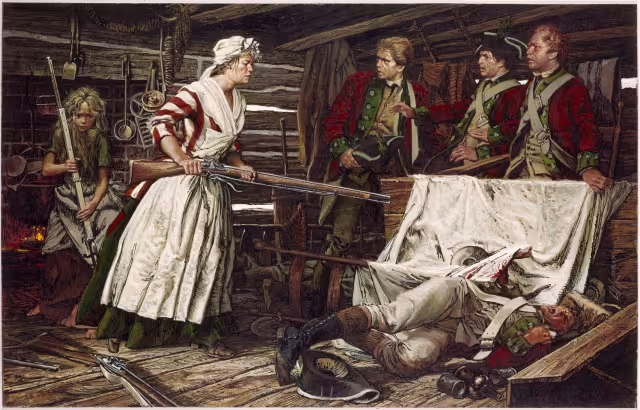
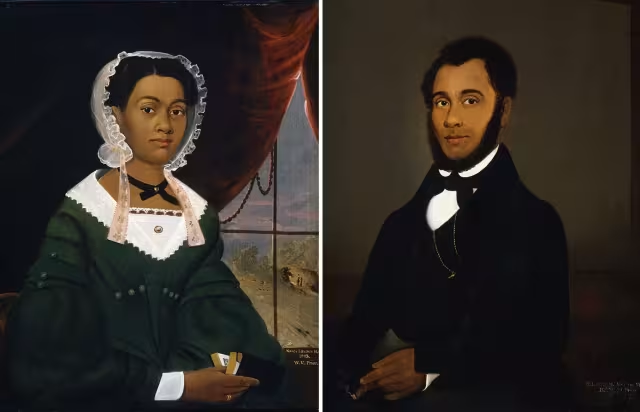
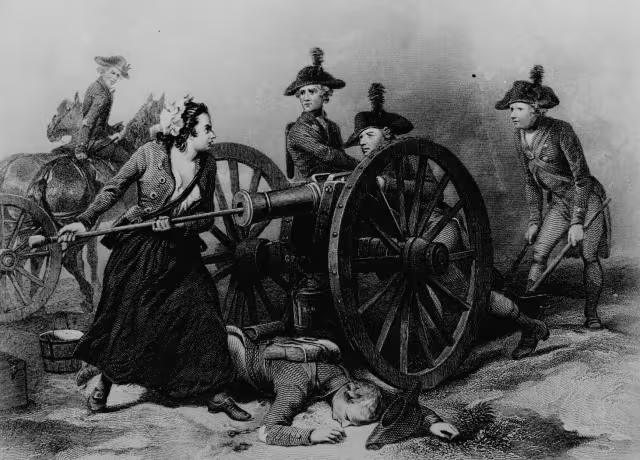
A cohort of educated Boston women left some of the most vivid accounts of the Revolutionary moment. Abigail Adams, Mercy Otis Warren, Mary Palmer (a family relation of Abigail), and Hannah Fayerweather Tolman Winthrop corresponded with one another and with leaders in Philadelphia throughout the Siege of Boston, debating Thomas Paine’s Common Sense and recording military events with precision. Mary Palmer wrote detailed dispatches to John Adams, who praised women's ability to see the larger picture clearly. Abigail Adams, recovering from a smallpox inoculation when the Declaration arrived, walked to King Street on July 18, 1776, to hear it read from the State House balcony, and described the crowd afterward tearing down the King's arms. Functioning as indispensable witnesses and historians of the Revolutionary moment, these women preserved a record of the war's daily texture and political stakes that few of their male contemporaries matched.
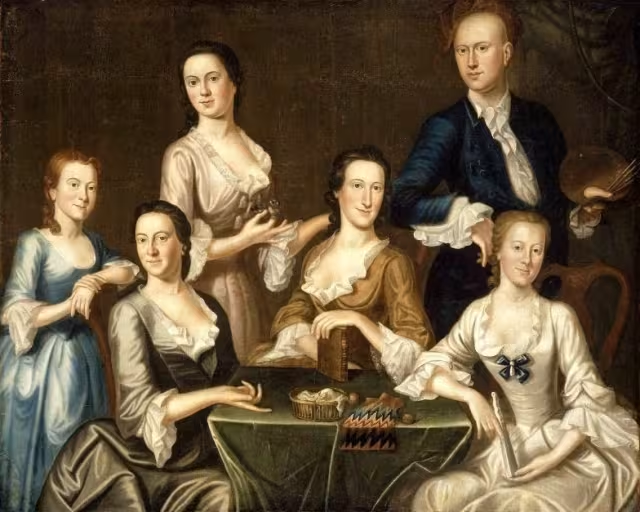
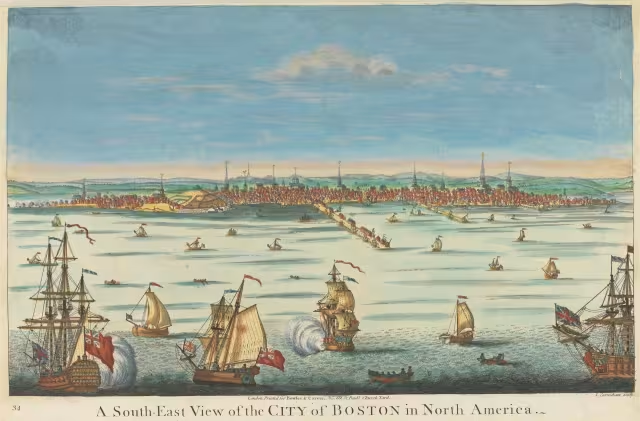
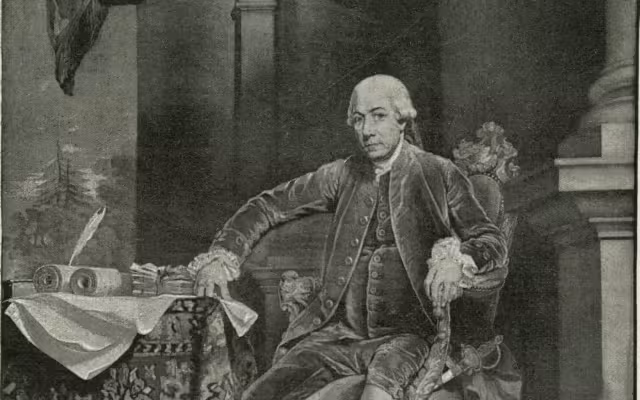
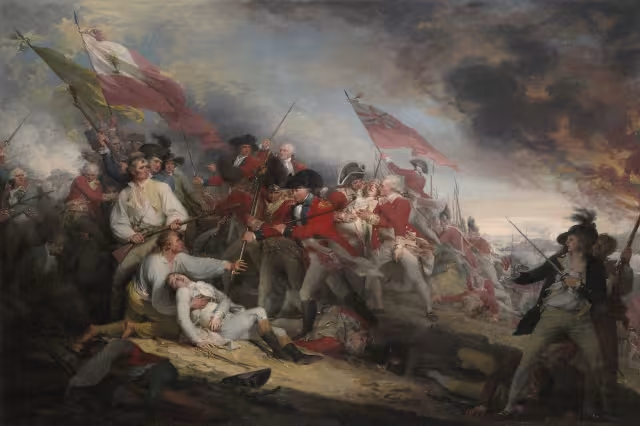
Massachusetts was the intellectual and commercial engine of colonial resistance, where a thriving print culture and a powerful merchant class made Boston the early center of opposition to British taxation. The Stamp Act, the Boston Tea Party, and the Coercive Acts led to the Battle of Lexington and Concord and the British evacuation in March 1776, which suggested that victory over the world's greatest empire was possible. When the Declaration of Independence arrived in Massachusetts, it was read from the State House balcony and ordered read in every church, though Loyalists denounced it. John Adams, the “Atlas of Independence,” shaped both the vote for separation and the model constitutions that followed. Educated women including Abigail Adams and Mercy Otis Warren became indispensable chroniclers of the Revolutionary era, while African Americans waged a sustained campaign of freedom petitions—led by Prince Hall—that helped end slavery in the state. In 1776, the Massachusetts Council signed the Treaty of Watertown, which established a military alliance between the state and several northeastern Native nations.

More Women perspectives

View details
  • Connecticut

    Women

    6:18 Just watched
  • Delaware

    Women

    6:16 Just watched
  • Georgia

    Women

    3:46 Just watched
  • Maryland

    Women

    2:09 Just watched
  • New Hampshire

    Women

    4:50 Just watched
  • New York

    Women

    5:38 Just watched
  • North Carolina

    Women

    5:33 Just watched
  • Rhode Island

    Women

    9:31 Just watched
  • South Carolina

    Women

    Just watched
  • Virginia

    Women

    8:24 Just watched

More from Massachusetts

View details
  • Massachusetts

    Context

    18:34 Just watched
  • Massachusetts

    Declaration

    9:20 Just watched
  • Massachusetts

    Memory

    21:25 Just watched
  • Massachusetts

    African Americans

    11:25 Just watched
  • Massachusetts

    Elected officials

    4:26 Just watched
  • Massachusetts

    Indigenous people

    3:34 Just watched
  • Massachusetts

    Loyalists

    4:39 Just watched
  • Connecticut
  • Delaware
  • Georgia
  • Maryland
  • Massachusetts
  • New Hampshire
  • New Jersey
  • New York
  • North Carolina
  • Pennsylvania
  • Rhode Island
  • South Carolina
  • Virginia

Perspectives

  • Women
  • African Americans
  • Loyalists
  • Indigenous people
  • Elected officials

About

How was national independence anticipated, debated, and enacted in each of the original 13 states during the American Revolution?

How has national independence, particularly the ideas articulated in the Declaration of Independence, been remembered and invoked over the last 250 years?

Learn more

Bookmarks

    No bookmarks yet. Bookmark a video to save it here.

    0