Massachusetts | Perspective

African Americans

Interviewees:
  • Kate Melchior
    • Associate Director of Educator Engagement and Outreach, Massachusetts Historical Society
  • Heather Wilson
    • Assistant Director for K-12 Learning, Massachusetts Historical Society

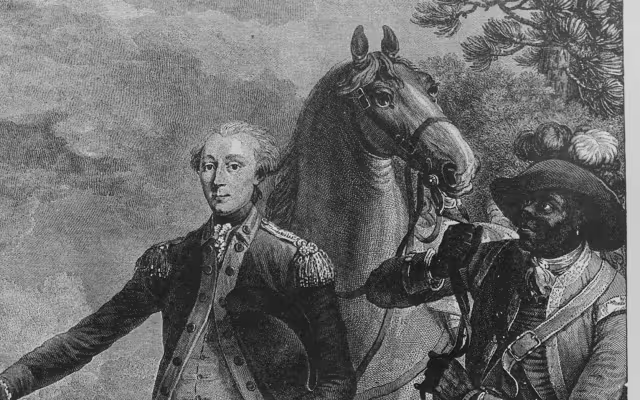
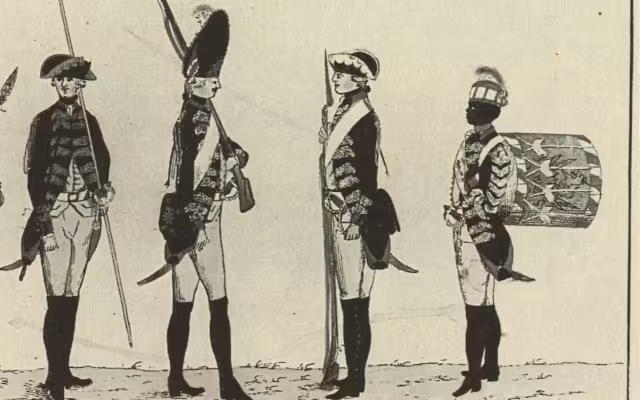
Massachusetts's African American community—both free and enslaved—responded to the Declaration through a sustained, strategic campaign of freedom petitions. At least eight petitions reached the legislature between 1773 and 1777, all using the same natural-rights language then shaping colonial resistance. The January 13, 1777 petition, primarily authored by Prince Hall, called for an immediate end to slavery, arguing that every principle upon which America had acted against Britain pleaded stronger than a thousand arguments in favor of the petitioners' own freedom. Signed also by Peter Bestes, Lancaster Hill, Bristol Spencer, and others, it underscored the inconsistency of patriots fighting for liberty while holding people in bondage. The campaign did not achieve immediate emancipation, but it propelled statewide debates about citizenship and contributed to the legal momentum, beginning with Mumbet’s freedom lawsuit in the early 1780s, that eventually ended slavery in Massachusetts.
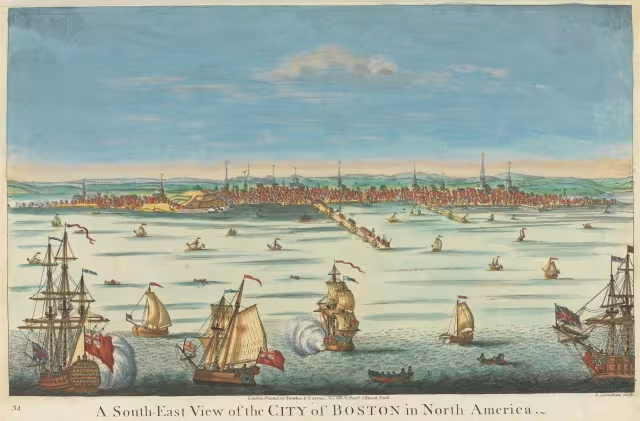
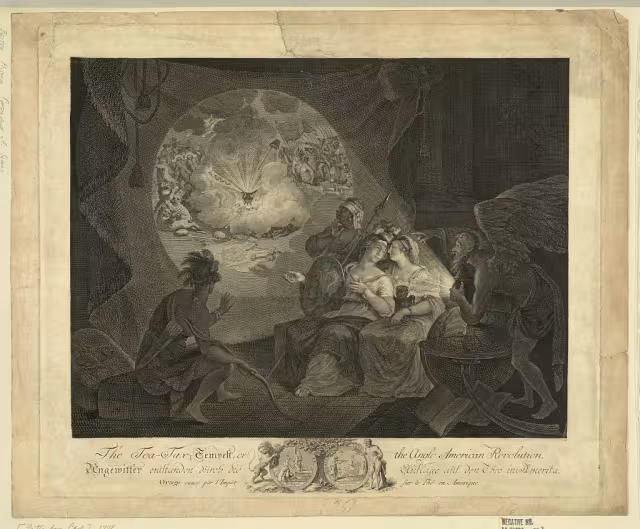
Massachusetts was the intellectual and commercial engine of colonial resistance, where a thriving print culture and a powerful merchant class made Boston the early center of opposition to British taxation. The Stamp Act, the Boston Tea Party, and the Coercive Acts led to the Battle of Lexington and Concord and the British evacuation in March 1776, which suggested that victory over the world's greatest empire was possible. When the Declaration of Independence arrived in Massachusetts, it was read from the State House balcony and ordered read in every church, though Loyalists denounced it. John Adams, the “Atlas of Independence,” shaped both the vote for separation and the model constitutions that followed. Educated women including Abigail Adams and Mercy Otis Warren became indispensable chroniclers of the Revolutionary era, while African Americans waged a sustained campaign of freedom petitions—led by Prince Hall—that helped end slavery in the state. In 1776, the Massachusetts Council signed the Treaty of Watertown, which established a military alliance between the state and several northeastern Native nations.

More African Americans perspectives

View details
  • Connecticut

    African Americans

    4:57 Just watched
  • Delaware

    African Americans

    5:52 Just watched
  • Georgia

    African Americans

    3:38 Just watched
  • Maryland

    African Americans

    7:53 Just watched
  • New Hampshire

    African Americans

    4:51 Just watched
  • New Jersey

    African Americans

    16:16 Just watched
  • New York

    African Americans

    4:16 Just watched
  • North Carolina

    African Americans

    4:29 Just watched
  • Pennsylvania

    African Americans

    6:15 Just watched
  • Rhode Island

    African Americans

    11:20 Just watched
  • South Carolina

    African Americans

    4:19 Just watched
  • Virginia

    African Americans

    7:50 Just watched

More from Massachusetts

View details
  • Massachusetts

    Context

    18:34 Just watched
  • Massachusetts

    Declaration

    9:20 Just watched
  • Massachusetts

    Memory

    21:25 Just watched
  • Massachusetts

    Elected officials

    4:26 Just watched
  • Massachusetts

    Indigenous people

    3:34 Just watched
  • Massachusetts

    Loyalists

    4:39 Just watched
  • Massachusetts

    Women

    4:18 Just watched
  • Connecticut
  • Delaware
  • Georgia
  • Maryland
  • Massachusetts
  • New Hampshire
  • New Jersey
  • New York
  • North Carolina
  • Pennsylvania
  • Rhode Island
  • South Carolina
  • Virginia

Perspectives

  • Women
  • African Americans
  • Loyalists
  • Indigenous people
  • Elected officials

About

How was national independence anticipated, debated, and enacted in each of the original 13 states during the American Revolution?

How has national independence, particularly the ideas articulated in the Declaration of Independence, been remembered and invoked over the last 250 years?

Learn more

Bookmarks

    No bookmarks yet. Bookmark a video to save it here.

    0