Perspective
Indigenous people
Native nations across the thirteen colonies approached the Revolution not as passive subjects but as experienced sovereign powers navigating between competing imperial forces. Their choices were shaped by geography, prior treaty relationships, land pressure, and a clear-eyed reading of which side offered more reliable protection against colonial expansion.
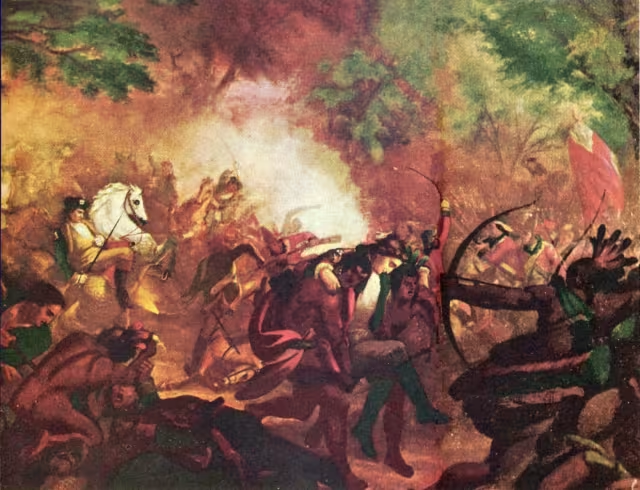
In southern New England, several nations gave military support to the Patriots, including Connecticut's Mohegan and Mashantucket Pequot, a significant portion of which had been educated at mission schools, and Rhode Island's Narragansett. Further north, most Abenaki in New Hampshire and Maine sided with the British, though some fought alongside Patriots at Bennington. Across the mid-Atlantic and South, the patterns were equally varied. Pennsylvania's Chief White Eyes addressed the Continental Congress directly, secured the Fort Pitt Treaty of 1778, and was promised a sovereign Lenape state in Ohio with representation in Congress—promises that were never honored. Virginia's Pamunkey supported the Patriots, while the Shawnee on the western frontier clashed directly with colonists whose land hunger was itself embedded in the Revolution's origins. In the Carolinas, the Catawba fought for the Patriots and still lost most of their landholdings after the war. New York's Haudenosaunee Confederacy, one of the oldest political confederacies in North America, fractured along tribal lines, with most joining the British under Mohawk leader Joseph Brant.
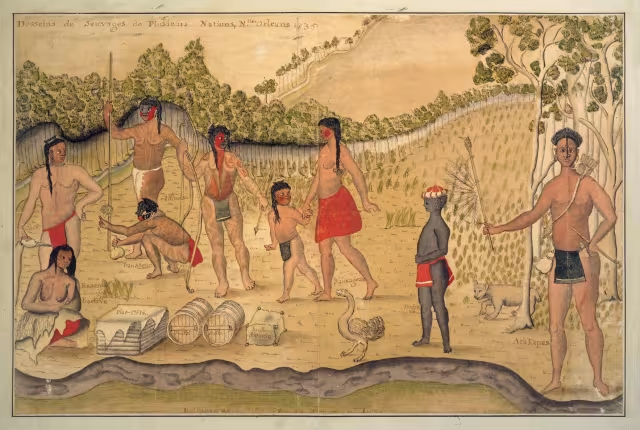
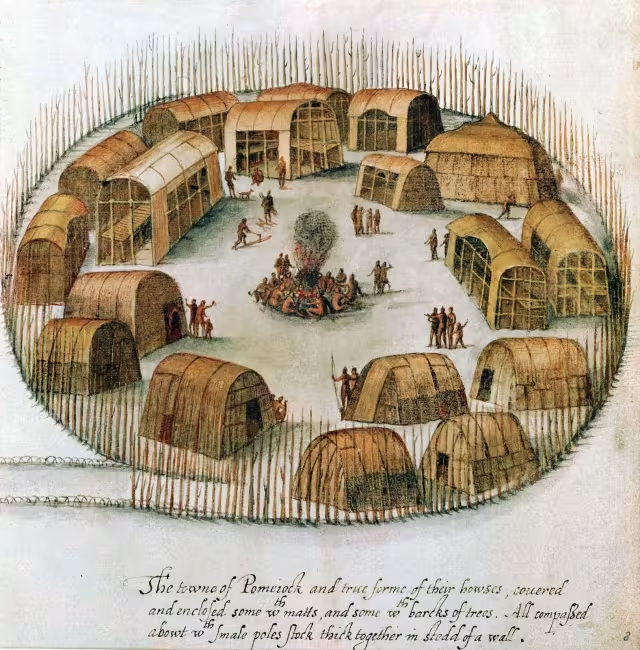
Image source: Watercolor of the “Indian Village of Pomeiooc,” by John White (created 1585–1586), licensed by the Trustees of the British Museum.
- Connecticut
Indigenous people
- Delaware
Indigenous people
- Georgia
Indigenous people
- Maryland
Indigenous people
- Massachusetts
Indigenous people
- New Hampshire
Indigenous people
- New York
Indigenous people
- North Carolina
Indigenous people
- Pennsylvania
Indigenous people
- Rhode Island
Indigenous people
- South Carolina
Indigenous people
- Virginia
Indigenous people