New York | Perspective

Indigenous people

Interviewees:
  • Julie Golia
    • Linda May Uris Director, Humanities and Social Sciences Research Library, New York Public Library
  • Meredith Mann
    • Interim Charles J. Liebman Curator of Manuscripts, New York Public Library

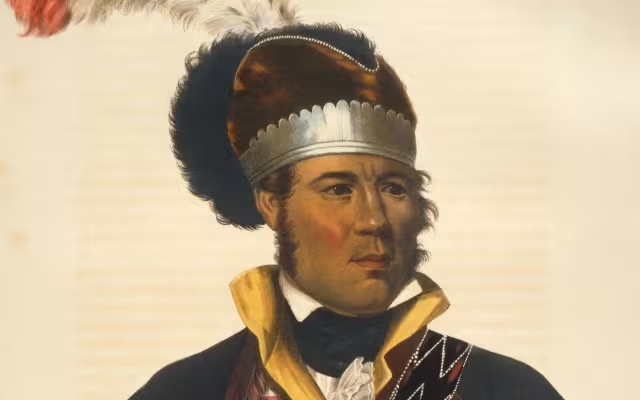
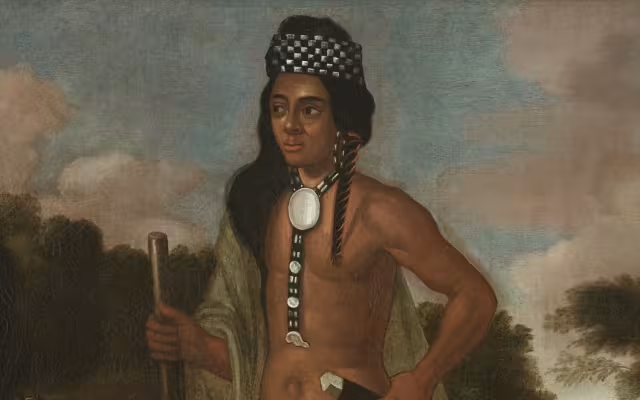
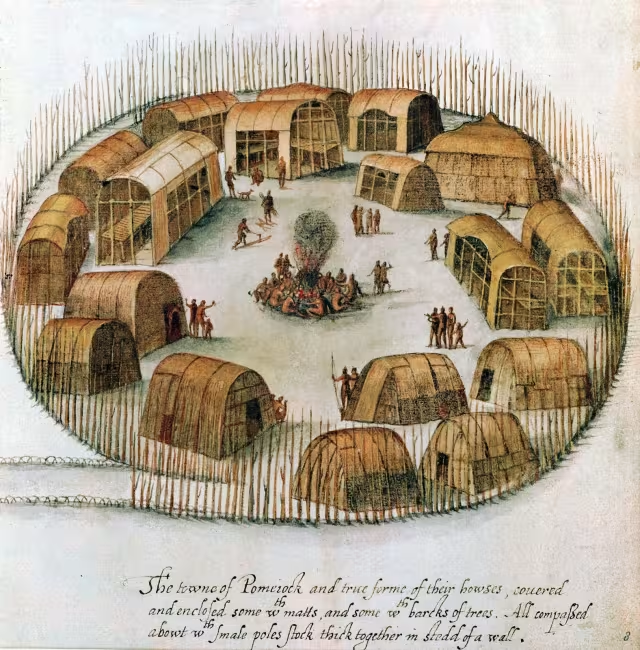
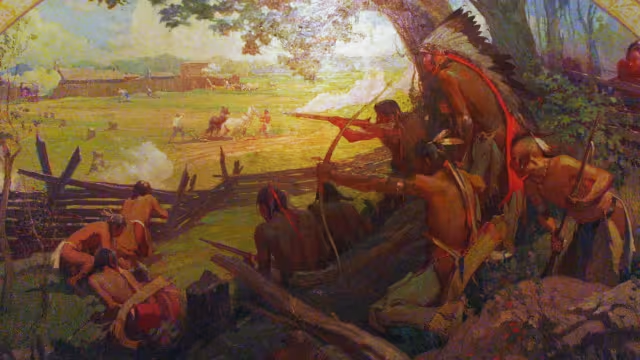
Upstate New York was the heartland of the Haudenosaunee Confederacy—also known as the Iroquois or Six Nations—one of North America's oldest political confederacies. The Haudenosaunee were experienced diplomats who had negotiated with European powers for generations and brought that perspective to the Revolution. The conflict forced an impossible internal choice: most nations, including the Mohawk and their war chief Joseph Brant (Thayendanegea), sided with the British, who had established the Proclamation Line of 1763 to restrain colonial land hunger. That decision fractured the Confederacy along nation lines, with lasting consequences. The shift in bargaining position is starkly illustrated by the two Treaties of Fort Stanwix: in the first (1768, with the British), Mohawk negotiators dealt from recognized sovereignty; in the second (1784, with the United States), American negotiators entered as conquerors and refused to acknowledge the sovereignty of any of the Six Nations.
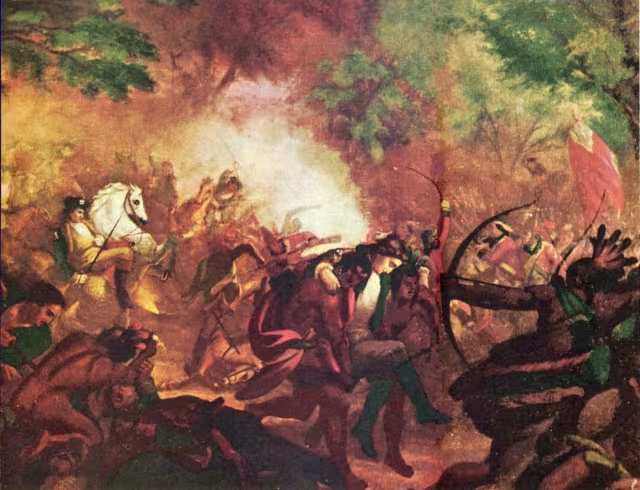
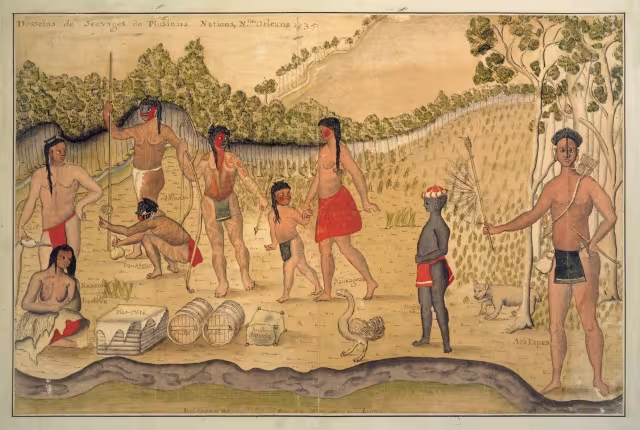
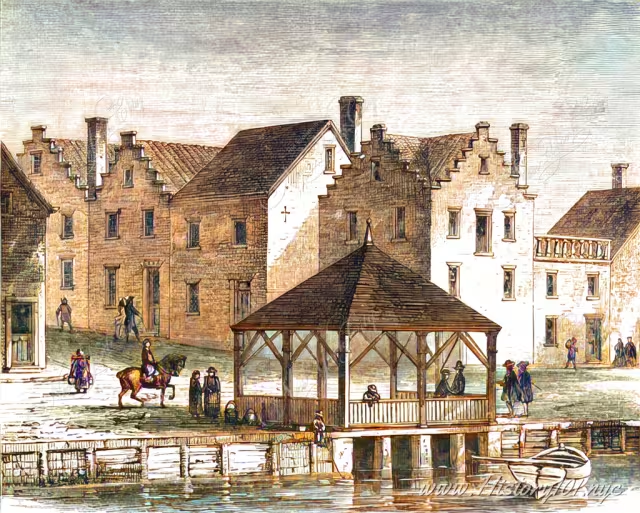
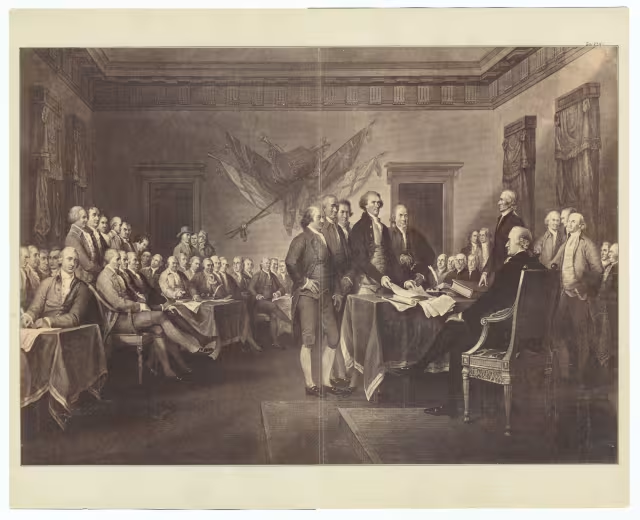
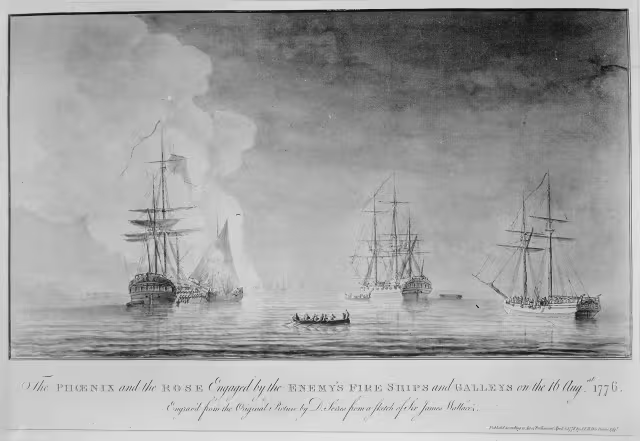
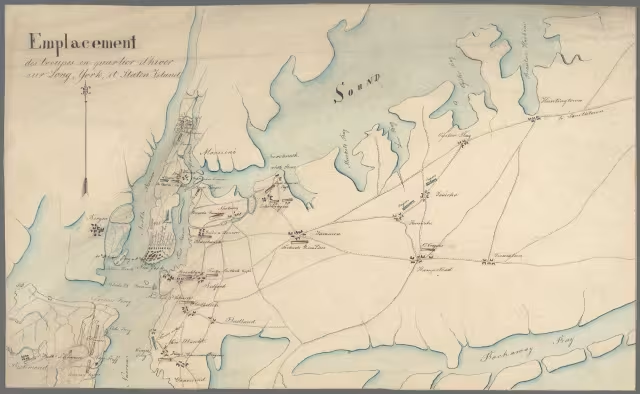
New York was cosmopolitan, mercantile, and arguably the most Loyalist of the colonies, with its merchant class bound to Britain by trade. It was among the slowest to embrace independence, acknowledging the Declaration only on July 9, 1776, after which crowds toppled the nearby gilded statue of King George III and melted it down for ammunition. Soon after, the British army captured New York City and made it its military headquarters. The city remained occupied for seven years. The state produced contrasting leaders in Alexander Hamilton and George Clinton, vivid voices like the Quaker poet Hannah Lawrence, and fluid loyalties embodied by printer James Rivington. Slavery was omnipresent in New York City as well as in rural areas of the state. Black Loyalists like Boston King self-emancipated to British-occupied New York City and faced acute uncertainty about their postwar future. Upstate, the war fractured the Haudenosaunee Confederacy, and the second Treaty of Fort Stanwix saw Americans negotiate in the posture of conquerors rather than equals.

More Indigenous people perspectives

View details
  • Connecticut

    Indigenous people

    10:58 Just watched
  • Delaware

    Indigenous people

    3:11 Just watched
  • Georgia

    Indigenous people

    2:36 Just watched
  • Maryland

    Indigenous people

    1:20 Just watched
  • Massachusetts

    Indigenous people

    3:34 Just watched
  • New Hampshire

    Indigenous people

    3:49 Just watched
  • North Carolina

    Indigenous people

    4:28 Just watched
  • Pennsylvania

    Indigenous people

    2:43 Just watched
  • Rhode Island

    Indigenous people

    5:31 Just watched
  • South Carolina

    Indigenous people

    2:58 Just watched
  • Virginia

    Indigenous people

    5:35 Just watched

More from New York

View details
  • New York

    Context

    20:43 Just watched
  • New York

    Declaration

    13:22 Just watched
  • New York

    Memory

    8:05 Just watched
  • New York

    African Americans

    4:16 Just watched
  • New York

    Elected officials

    2:51 Just watched
  • New York

    Loyalists

    4:15 Just watched
  • New York

    Women

    5:38 Just watched
  • Connecticut
  • Delaware
  • Georgia
  • Maryland
  • Massachusetts
  • New Hampshire
  • New Jersey
  • New York
  • North Carolina
  • Pennsylvania
  • Rhode Island
  • South Carolina
  • Virginia

Perspectives

  • Women
  • African Americans
  • Loyalists
  • Indigenous people
  • Elected officials

About

How was national independence anticipated, debated, and enacted in each of the original 13 states during the American Revolution?

How has national independence, particularly the ideas articulated in the Declaration of Independence, been remembered and invoked over the last 250 years?

Learn more

Bookmarks

    No bookmarks yet. Bookmark a video to save it here.

    0