Pennsylvania | Perspective

Indigenous people

Interviewees:
  • David Brigham
    • President and CEO, Historical Society of Pennsylvania
  • William Ewald
    • John J. O’Brien Professor of Comparative and International Law, University of Pennsylvania Law School

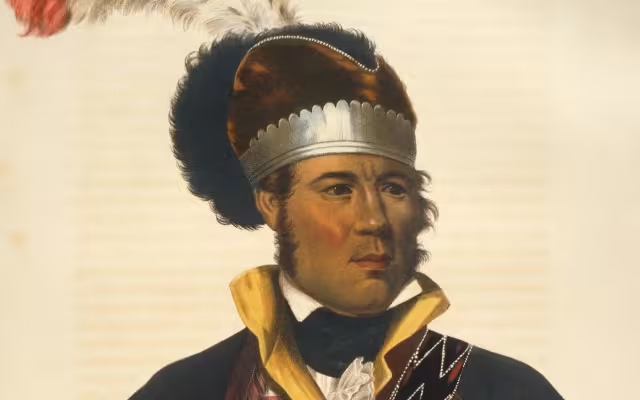
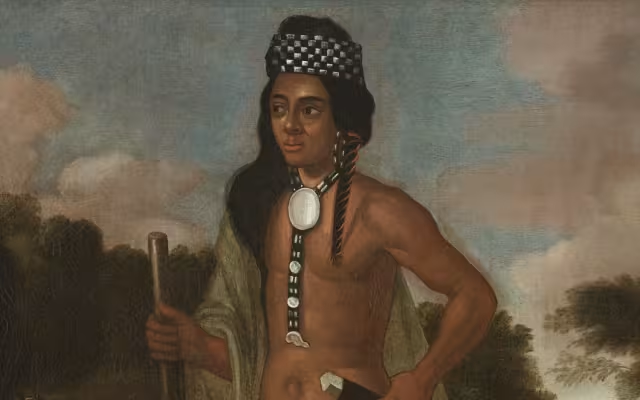
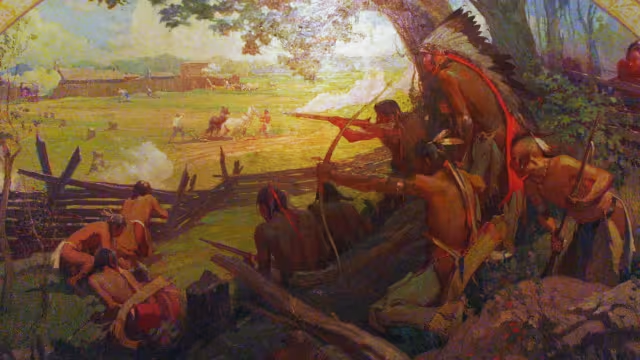
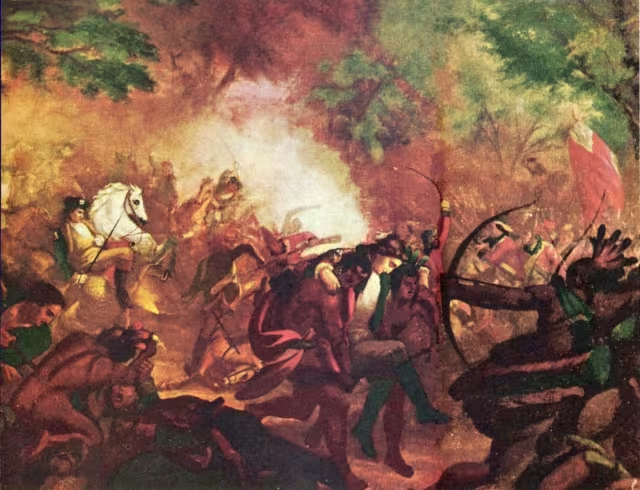
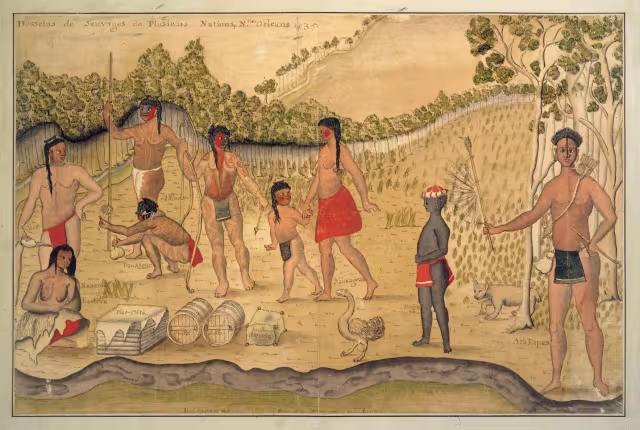
The Lenni Lenape had lived in the Delaware Valley long before Penn's arrival, and his treaties had made Pennsylvania's early Native relations notably peaceful. By 1776, however, that peace was strained by decades of land loss. In December 1776, Chief White Eyes of the Delaware nation traveled to Philadelphia and addressed Congress, offering an alliance. Congress promised ten thousand dollars in goods and, remarkably, a sovereign Lenape state in Ohio with full representation in Congress. The Fort Pitt Treaty of 1778 formalized the alliance, and White Eyes's people fought alongside American forces in the Ohio country. The promises were never honored. White Eyes died in 1778 under suspicious circumstances, officially of smallpox but, his people believed, murdered by American militiamen. His speech survives in the papers of Jasper Yeates, one of the only direct addresses from a Native leader to the Continental Congress.
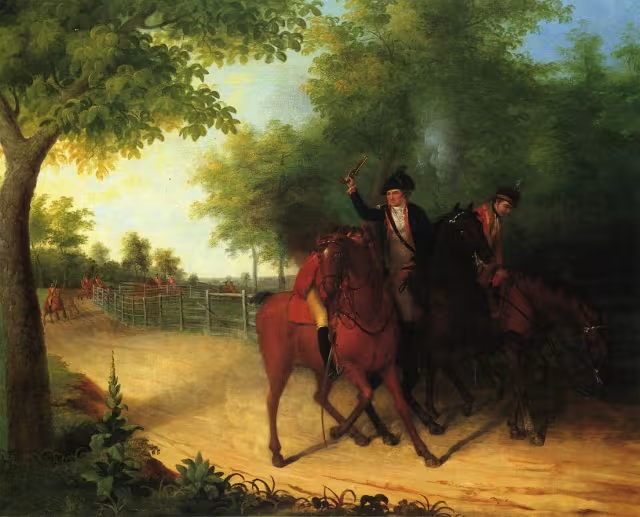
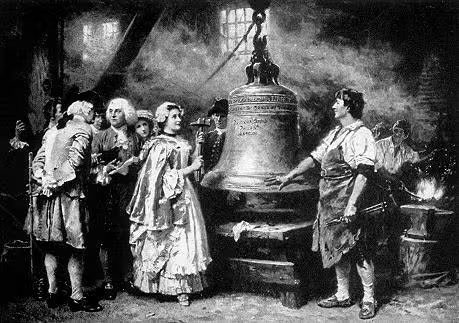
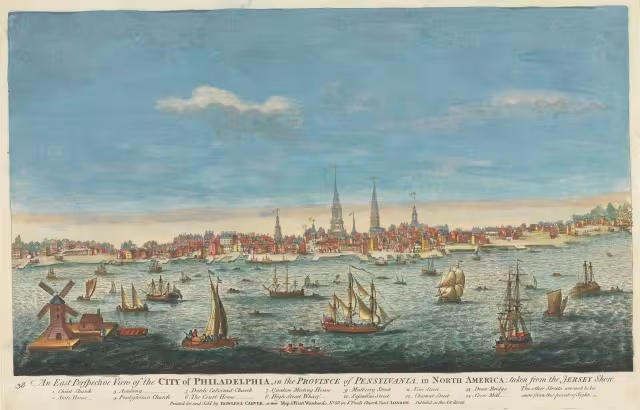
Pennsylvania, founded by William Penn as a “holy experiment” in religious tolerance, was home to Philadelphia, the largest city in colonial America and the natural stage for the Revolution. The First Continental Congress met there. Thomas Paine's Common Sense, which shaped how all thirteen colonies understood the independence cause, was published there. And John Dunlap printed the first authoritative broadside of the Declaration in the city in July 1776. The colony's delegates to the Continental Congress were divided on the Declaration. Benjamin Franklin and James Wilson voted yes, while the cautious John Dickinson abstained. Pennsylvania's radical 1776 constitution became the most democratic in America. Pennsylvania also led the way against slavery with the first abolition society and the first gradual emancipation law in 1780, even as Congress's broken promises to Chief White Eyes and the Lenape exposed the Revolution's limits.

More Indigenous people perspectives

View details
  • Connecticut

    Indigenous people

    10:58 Just watched
  • Delaware

    Indigenous people

    3:11 Just watched
  • Georgia

    Indigenous people

    2:36 Just watched
  • Maryland

    Indigenous people

    1:20 Just watched
  • Massachusetts

    Indigenous people

    3:34 Just watched
  • New Hampshire

    Indigenous people

    3:49 Just watched
  • New York

    Indigenous people

    4:24 Just watched
  • North Carolina

    Indigenous people

    4:28 Just watched
  • Rhode Island

    Indigenous people

    5:31 Just watched
  • South Carolina

    Indigenous people

    2:58 Just watched
  • Virginia

    Indigenous people

    5:35 Just watched

More from Pennsylvania

View details
  • Pennsylvania

    Context

    23:13 Just watched
  • Pennsylvania

    Declaration

    23:24 Just watched
  • Pennsylvania

    Memory

    7:52 Just watched
  • Pennsylvania

    African Americans

    6:15 Just watched
  • Pennsylvania

    Elected officials

    3:02 Just watched
  • Connecticut
  • Delaware
  • Georgia
  • Maryland
  • Massachusetts
  • New Hampshire
  • New Jersey
  • New York
  • North Carolina
  • Pennsylvania
  • Rhode Island
  • South Carolina
  • Virginia

Perspectives

  • Women
  • African Americans
  • Loyalists
  • Indigenous people
  • Elected officials

About

How was national independence anticipated, debated, and enacted in each of the original 13 states during the American Revolution?

How has national independence, particularly the ideas articulated in the Declaration of Independence, been remembered and invoked over the last 250 years?

Learn more

Bookmarks

    No bookmarks yet. Bookmark a video to save it here.

    0