Pennsylvania | Theme

Declaration

Interviewees:
  • David Brigham
    • President and CEO, Historical Society of Pennsylvania
  • William Ewald
    • John J. O’Brien Professor of Comparative and International Law, University of Pennsylvania Law School

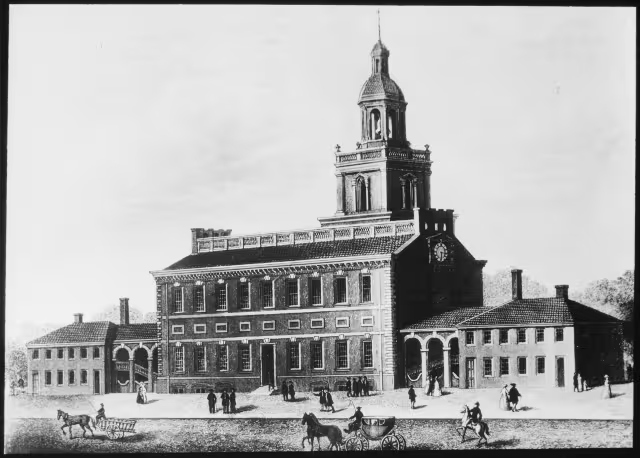
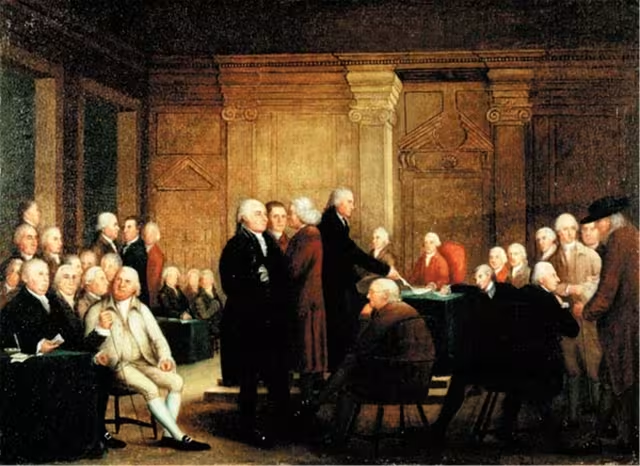
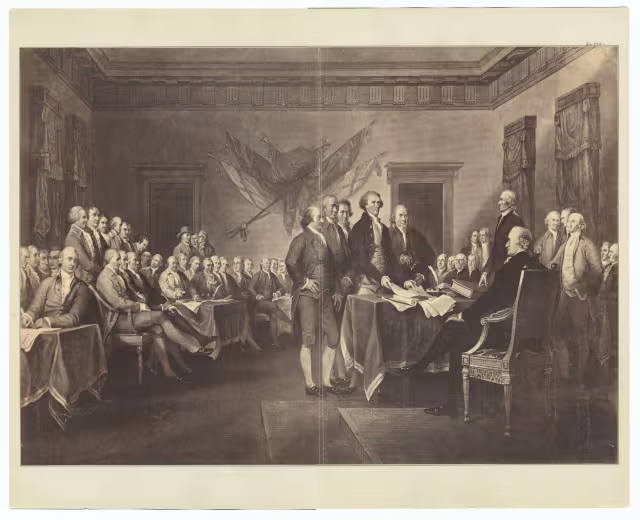
Philadelphia was the birthplace of the Declaration in more than one sense. John Dunlap, an Irish-born printer at Second and Market Streets, was commissioned as Congress's official printer and produced the first authoritative printing—the Dunlap broadside—likely in the early hours of July 5, 1776. About two hundred copies were printed. Twenty-six survive, one bearing Jefferson's manuscript pacing marks for reading the text aloud. The Declaration received its first public reading on July 8, when John Nixon read it in the statehouse yard to a crowd that included the young free Black Philadelphian James Forten. The Pennsylvania Evening Post had printed the text first, on July 6, and it circulated rapidly in both English and German. The Declaration even left a trace in Latonia, a manuscript newspaper written by boys at the Quaker Latin School between 1777 and 1778, whose handwritten sheets recorded the disruptions of occupation—a rare youthful civilian perspective on what the Declaration had set in motion.
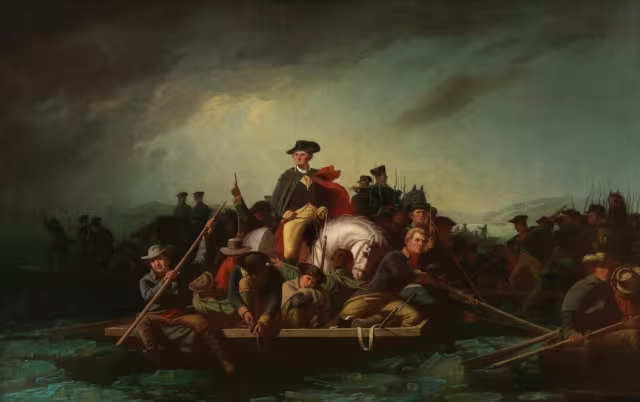
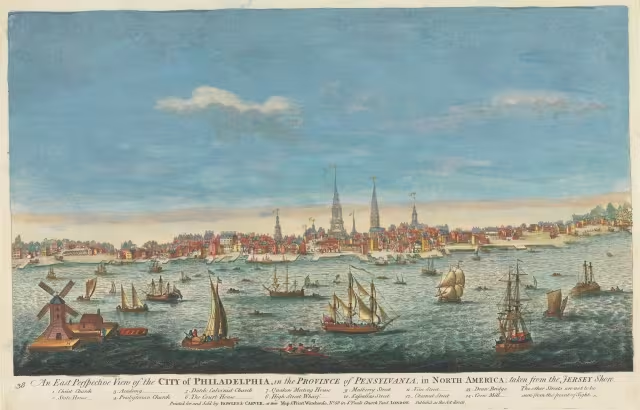
Pennsylvania, founded by William Penn as a “holy experiment” in religious tolerance, was home to Philadelphia, the largest city in colonial America and the natural stage for the Revolution. The First Continental Congress met there. Thomas Paine's Common Sense, which shaped how all thirteen colonies understood the independence cause, was published there. And John Dunlap printed the first authoritative broadside of the Declaration in the city in July 1776. The colony's delegates to the Continental Congress were divided on the Declaration. Benjamin Franklin and James Wilson voted yes, while the cautious John Dickinson abstained. Pennsylvania's radical 1776 constitution became the most democratic in America. Pennsylvania also led the way against slavery with the first abolition society and the first gradual emancipation law in 1780, even as Congress's broken promises to Chief White Eyes and the Lenape exposed the Revolution's limits.

More Declaration themes

View details
  • Connecticut

    Declaration

    8:48 Just watched
  • Delaware

    Declaration

    19:52 Just watched
  • Georgia

    Declaration

    26:32 Just watched
  • Maryland

    Declaration

    7:31 Just watched
  • Massachusetts

    Declaration

    9:20 Just watched
  • New Hampshire

    Declaration

    12:50 Just watched
  • New Jersey

    Declaration

    11:53 Just watched
  • New York

    Declaration

    13:22 Just watched
  • North Carolina

    Declaration

    5:54 Just watched
  • Rhode Island

    Declaration

    7:42 Just watched
  • South Carolina

    Declaration

    7:26 Just watched
  • Virginia

    Declaration

    23:28 Just watched

More from Pennsylvania

View details
  • Pennsylvania

    Context

    23:13 Just watched
  • Pennsylvania

    Memory

    7:52 Just watched
  • Pennsylvania

    African Americans

    6:15 Just watched
  • Pennsylvania

    Elected officials

    3:02 Just watched
  • Pennsylvania

    Indigenous people

    2:43 Just watched
  • Connecticut
  • Delaware
  • Georgia
  • Maryland
  • Massachusetts
  • New Hampshire
  • New Jersey
  • New York
  • North Carolina
  • Pennsylvania
  • Rhode Island
  • South Carolina
  • Virginia

Perspectives

  • Women
  • African Americans
  • Loyalists
  • Indigenous people
  • Elected officials

About

How was national independence anticipated, debated, and enacted in each of the original 13 states during the American Revolution?

How has national independence, particularly the ideas articulated in the Declaration of Independence, been remembered and invoked over the last 250 years?

Learn more

Bookmarks

    No bookmarks yet. Bookmark a video to save it here.

    0