Maryland | Theme

Declaration

Interviewees:
  • Martina Kado
    • Vice President of Research and France-Merrick Director of the H. Furlong Baldwin Library, Maryland Center for History and Culture
  • Micah Connor
    • Library Associate and Student Research Coordinator, Maryland Center for History and Culture

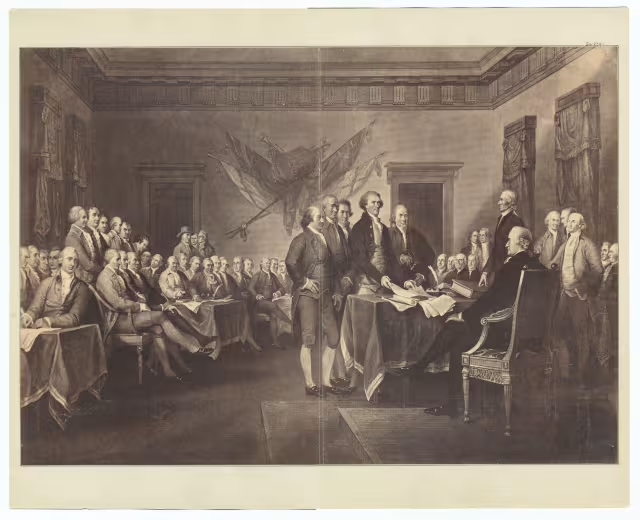
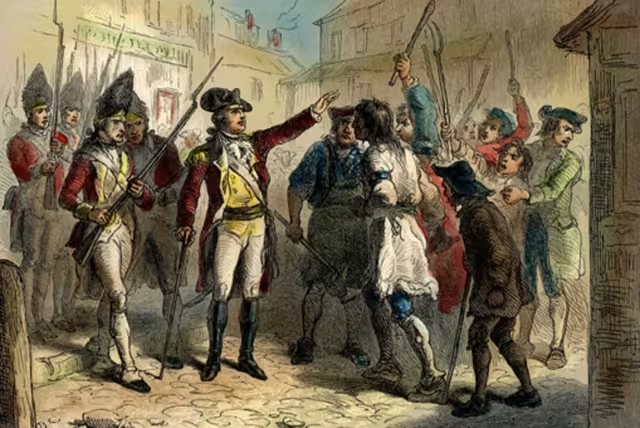
Maryland issued its own declaration of independence on July 6, 1776—two days after the Continental Congress—drawing on the writings of Charles Carroll of Carrollton. In 1777, the Maryland General Assembly enacted an Oath of Fidelity requiring every free man between the ages of 18 and 42 to pledge allegiance to the Patriot cause. Refusal meant triple taxation, exclusion from military service, and bans on teaching, practicing law or medicine, or preaching. Exempted groups included enslaved individuals and members of certain religious communities: Mennonites, German Baptist Brethren, and Quakers. Those already serving in the Continental Army or local militia were generally not required to take the oath separately. Surviving oath records, organized by county and magistrate, are preserved at the Maryland Center for History and Culture and the Maryland State Archives and serve as significant genealogical resources.
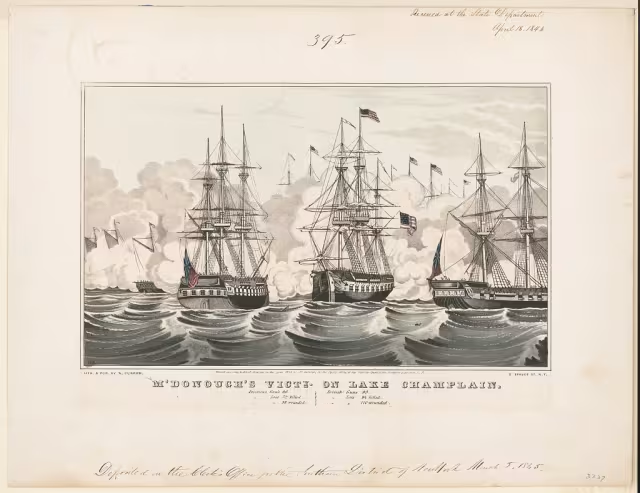
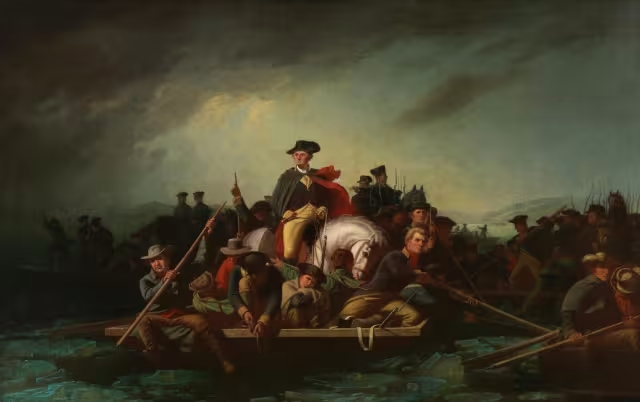
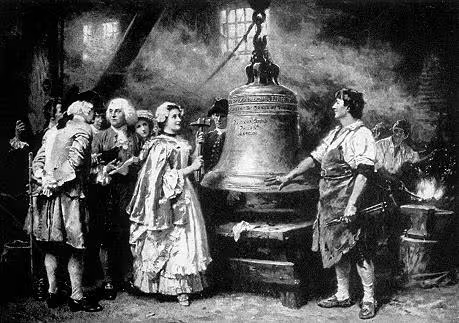
Pre-Revolutionary Maryland centered on Annapolis and increasingly on a fast-growing Baltimore, as the colony’s tobacco economy gradually shifted toward the grain trade and shipping. The colony issued its own declaration of independence on July 6, 1776, and later required free men to swear an Oath of Fidelity to the Patriot cause. Its four signers—Charles Carroll, Samuel Chase, William Paca, and Thomas Stone—were among Maryland's largest enslavers, embodying the Revolution's central contradiction. Baltimore printer Mary Katharine Goddard risked treason by putting her own name on the first broadside listing all the signers. More than one hundred African Americans served in integrated Maryland units and Indigenous communities like the Piscataway, Pocomoke, and Nanticoke endured on the colony's margins. Maryland's memory of independence unfolded across generations of public readings, toasts, and commemorations.

More Declaration themes

View details
  • Connecticut

    Declaration

    8:48 Just watched
  • Delaware

    Declaration

    19:52 Just watched
  • Georgia

    Declaration

    26:32 Just watched
  • Massachusetts

    Declaration

    9:20 Just watched
  • New Hampshire

    Declaration

    12:50 Just watched
  • New Jersey

    Declaration

    11:53 Just watched
  • New York

    Declaration

    13:22 Just watched
  • North Carolina

    Declaration

    5:54 Just watched
  • Pennsylvania

    Declaration

    23:24 Just watched
  • Rhode Island

    Declaration

    7:42 Just watched
  • South Carolina

    Declaration

    7:26 Just watched
  • Virginia

    Declaration

    23:28 Just watched

More from Maryland

View details
  • Maryland

    Context

    9:29 Just watched
  • Maryland

    Memory

    11:59 Just watched
  • Maryland

    African Americans

    7:53 Just watched
  • Maryland

    Elected officials

    1:41 Just watched
  • Maryland

    Indigenous people

    1:20 Just watched
  • Maryland

    Women

    2:09 Just watched
  • Connecticut
  • Delaware
  • Georgia
  • Maryland
  • Massachusetts
  • New Hampshire
  • New Jersey
  • New York
  • North Carolina
  • Pennsylvania
  • Rhode Island
  • South Carolina
  • Virginia

Perspectives

  • Women
  • African Americans
  • Loyalists
  • Indigenous people
  • Elected officials

About

How was national independence anticipated, debated, and enacted in each of the original 13 states during the American Revolution?

How has national independence, particularly the ideas articulated in the Declaration of Independence, been remembered and invoked over the last 250 years?

Learn more

Bookmarks

    No bookmarks yet. Bookmark a video to save it here.

    0