Perspective
African Americans
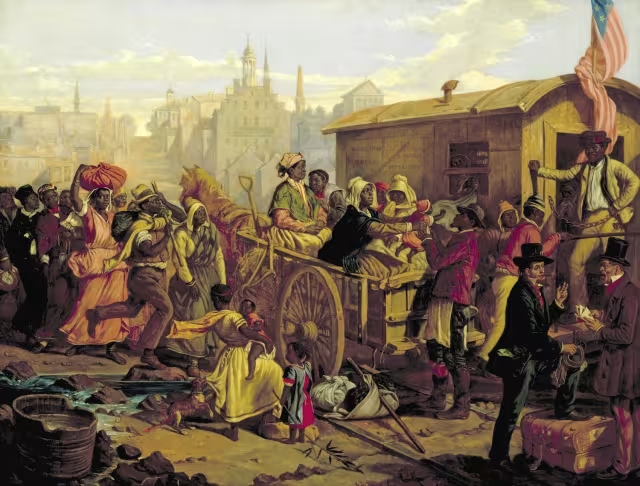
For African Americans across the thirteen colonies, the Revolution was at once a genuine opportunity and a profound contradiction: a conflict in which the language of natural rights and universal liberty was proclaimed while the institution of enslavement remained legally intact everywhere it existed.
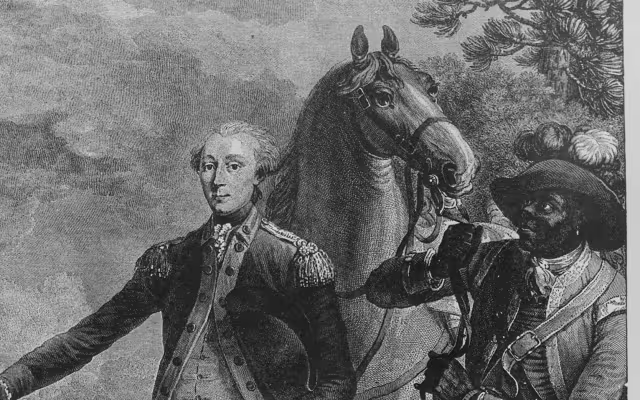
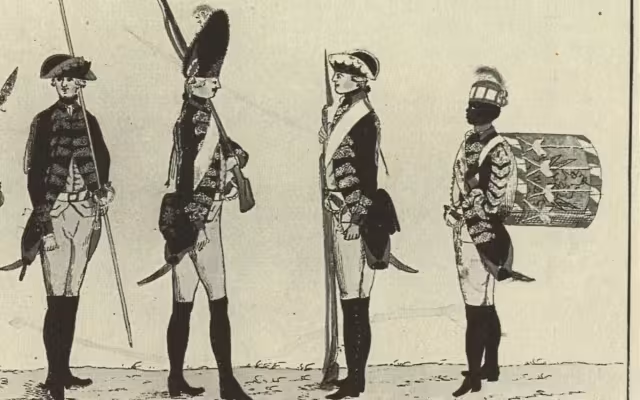
Two competing military paths shaped African American lives during the Revolutionary War. Patriot military service was widespread. Some five hundred men of color served in North Carolina's state forces. Delaware's men of color served from the beginning of the war to its end. Rhode Island's First Rhode Island Regiment, recruited with the explicit promise of freedom for the enslaved, earned praise for its valor at Yorktown. A greater number of African Americans, however, chose to serve in the British Army, which offered freedom in exchange for service. This was especially true in Maryland and Virginia, where hundreds self-emancipated by running to British lines, and in South Carolina, where thousands of formerly enslaved African Americans left with the British Army when it evacuated Charleston and Savannah.
The language of American protest against the British, as reflected in the Declaration of Independence and earlier proclamations, informed African American protests against enslavement and efforts to obtain freedom through legal channels. In Massachusetts, at least eight freedom petitions were submitted to the legislature between 1773 and 1777, all using the same natural rights language that fueled colonial resistance. Prince Hall's January 1777 petition argued that every principle from which America had acted against Britain "pleads stronger than a thousand arguments" in favor of Black freedom.
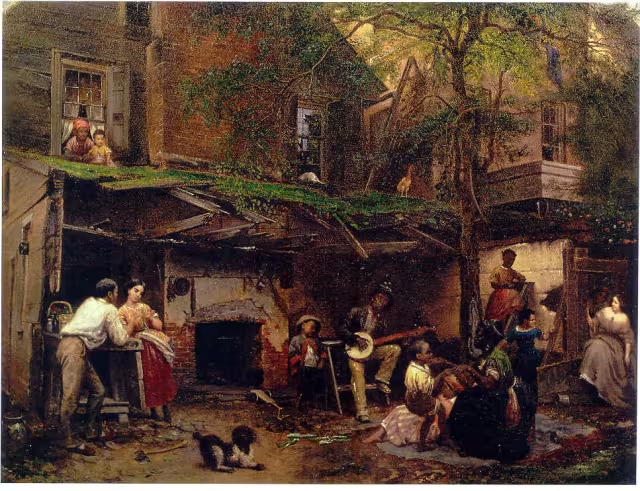
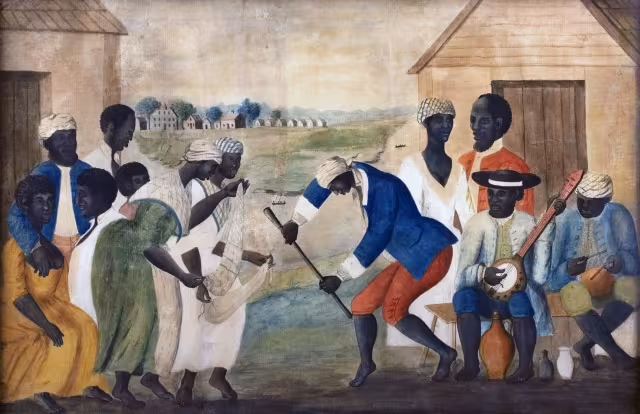
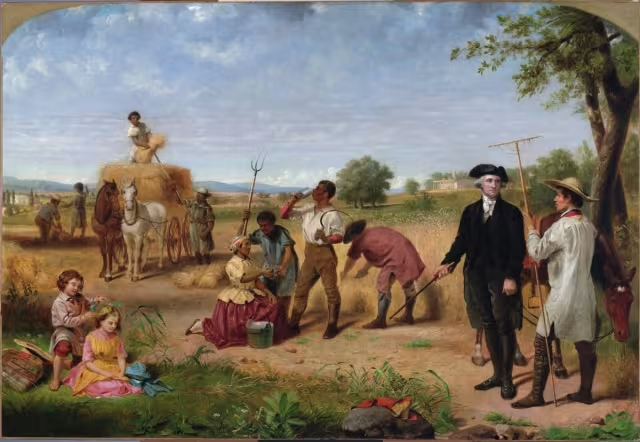
Image source: The Old Plantation, John Rose (circa 1785–1790), Slavery and Remembrance, Colonial Williamsburg Foundation.
- Connecticut
African Americans
- Delaware
African Americans
- Georgia
African Americans
- Maryland
African Americans
- Massachusetts
African Americans
- New Hampshire
African Americans
- New Jersey
African Americans
- New York
African Americans
- North Carolina
African Americans
- Pennsylvania
African Americans
- Rhode Island
African Americans
- South Carolina
African Americans
- Virginia
African Americans