Connecticut | Perspective

African Americans

Interviewees:
  • John Mills
    • President, Alex Breanne Corporation
    • Author of The Narrative of Primus

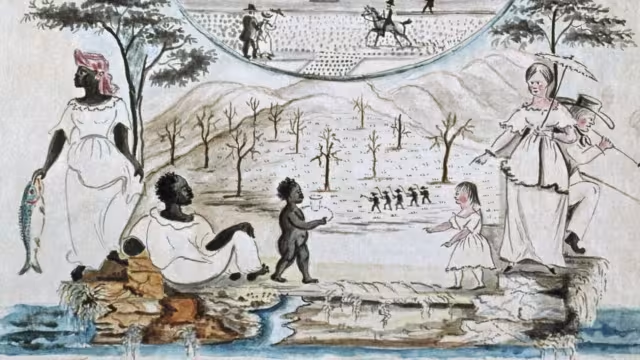
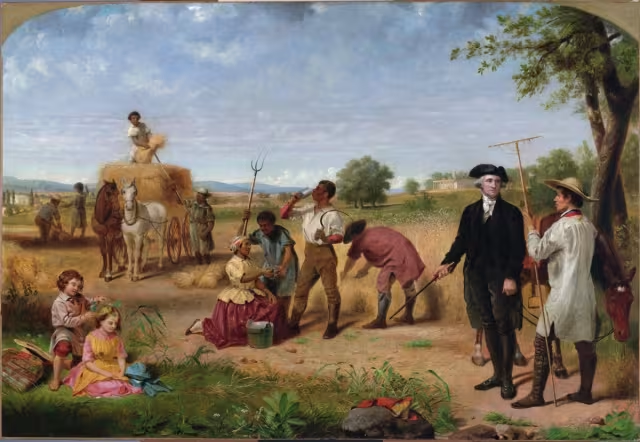
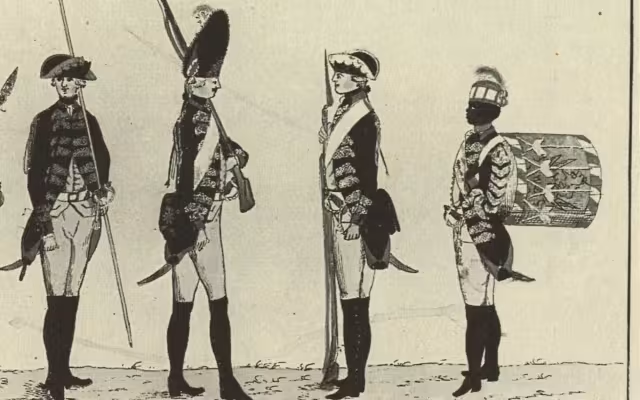
African Americans in Connecticut responded to the Declaration in multiple ways, all shaped by a clear recognition of its promises and contradictions. Syphax of Glastonbury enlisted in the Continental Army and negotiated a written contract with his enslaver surrendering his enlistment bounty in exchange for freedom after the conflict, an act of faith that the new nation would honor its promises. Others drew a different conclusion: when Lord Dunmore offered freedom for service to the Crown, roughly twenty thousand African Americans across the colonies accepted. Around 1776, Black Connecticans began taking names like Liberty, Freedom, and Freeman—a quiet declaration of their own. One enslaved man whose Loyalist enslaver had fled petitioned the General Assembly for his freedom and was granted it. Connecticut enacted a gradual emancipation law in 1784.
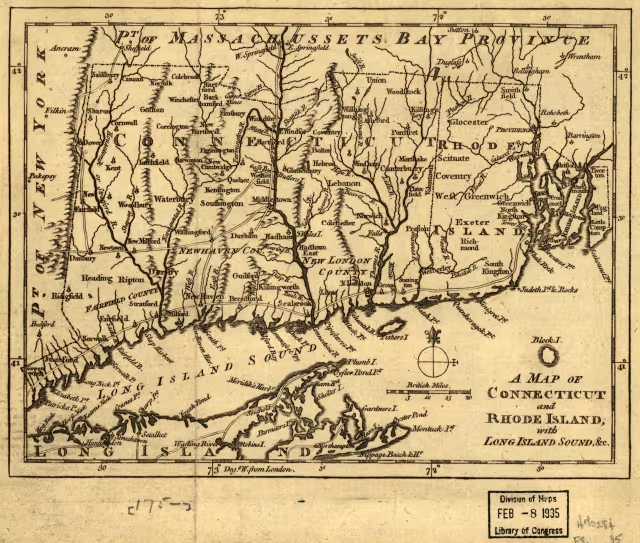
Connecticut's fierce commitment to independence sprang from its cherished 1662 charter, which granted an elected governor and an independent judiciary. On June 14, 1776, the Connecticut General Assembly met in Hartford and passed its own resolution for independence. Governor Jonathan Trumbull Sr. was the only colonial governor to back the Patriot cause throughout the entire Revolutionary War. During the war, Connecticut’s farm economy pivoted to supplying the Continental Army, earning the nickname “the Provisions State.” Four Connecticut delegates to the Continental Congress signed the Declaration of Independence, including Roger Sherman, the only founder to sign all four foundational documents. High literacy allowed women like Hannah Bunce Watson, who ran a pro-Revolution newspaper, to create a rich documentary record. African Americans took names like Freedom and Liberty and sued for their freedom, and the state's Native peoples—among the most enthusiastic Patriots—served in the military in large numbers, yet lost reservation lands after the war.

More African Americans perspectives

View details
  • Delaware

    African Americans

    5:52 Just watched
  • Georgia

    African Americans

    3:38 Just watched
  • Maryland

    African Americans

    7:53 Just watched
  • Massachusetts

    African Americans

    11:25 Just watched
  • New Hampshire

    African Americans

    4:51 Just watched
  • New Jersey

    African Americans

    16:16 Just watched
  • New York

    African Americans

    4:16 Just watched
  • North Carolina

    African Americans

    4:29 Just watched
  • Pennsylvania

    African Americans

    6:15 Just watched
  • Rhode Island

    African Americans

    11:20 Just watched
  • South Carolina

    African Americans

    4:19 Just watched
  • Virginia

    African Americans

    7:50 Just watched

More from Connecticut

View details
  • Connecticut

    Context

    8:23 Just watched
  • Connecticut

    Declaration

    8:48 Just watched
  • Connecticut

    Memory

    12:04 Just watched
  • Connecticut

    Elected officials

    6:28 Just watched
  • Connecticut

    Indigenous people

    10:58 Just watched
  • Connecticut

    Loyalists

    3:53 Just watched
  • Connecticut

    Women

    6:18 Just watched
  • Connecticut
  • Delaware
  • Georgia
  • Maryland
  • Massachusetts
  • New Hampshire
  • New Jersey
  • New York
  • North Carolina
  • Pennsylvania
  • Rhode Island
  • South Carolina
  • Virginia

Perspectives

  • Women
  • African Americans
  • Loyalists
  • Indigenous people
  • Elected officials

About

How was national independence anticipated, debated, and enacted in each of the original 13 states during the American Revolution?

How has national independence, particularly the ideas articulated in the Declaration of Independence, been remembered and invoked over the last 250 years?

Learn more

Bookmarks

    No bookmarks yet. Bookmark a video to save it here.

    0