Delaware | Perspective

African Americans

Interviewees:
  • Charles Fithian
    • Delaware Archeologist, Delaware Historical Society
  • Joseph Sullivan
    • Welcome Center Supervisor, Delaware Public Archives

Men of color—African Americans, Native Americans, and men of mixed heritage—served in the Delaware Regiment, the Flying Camp, and independent companies throughout the war. They are hard to identify because the army did not consistently record race, forcing researchers to cross-reference manumission, tax, and pension documents. Some were free; others were enslaved, sometimes in violation of recruiting rules. One man named George Lahea was discharged after nearly nine months when his enslaved status was discovered. Delaware made no explicit promise of freedom for service. A notable group of African Americans was among the 1781 recruits for the Delaware Regiment that Washington redirected to the Siege of Yorktown. After the war, one veteran faced an attempt at re-enslavement. Although the effort was later dropped and apologized for, it revealed how precarious African Americans’ freedom remained.
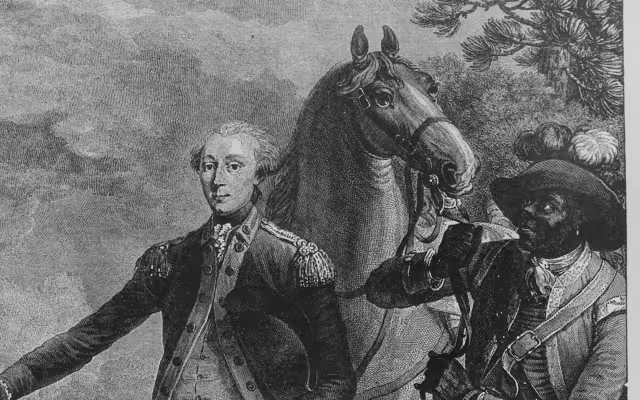
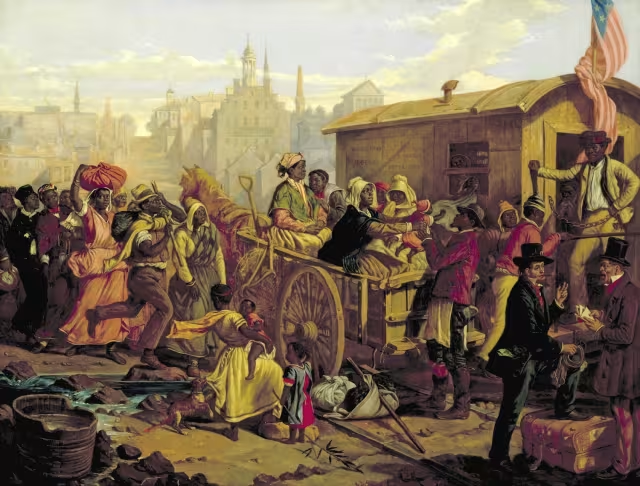
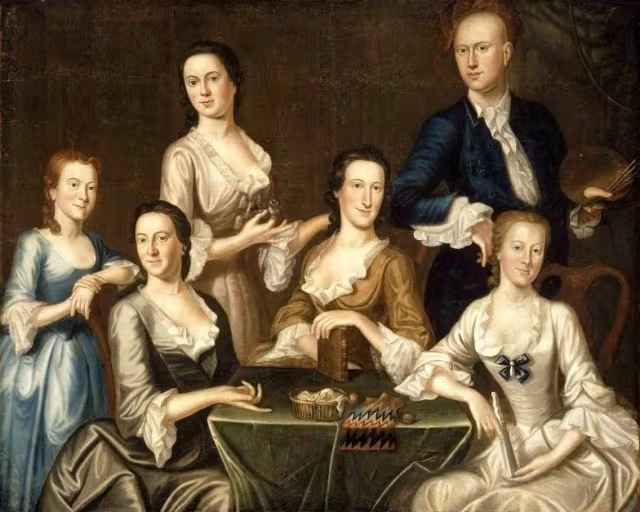
Delaware was a small but culturally layered colony—settled in turn by the Dutch, Swedish, and English—that had to declare independence twice, separating first from Pennsylvania in June 1776 and then from Britain weeks later. Loyalism ran deep and was never fully suppressed, erupting in uprisings like the Black Camp Rebellion and making the conflict a genuine civil war within many communities. Delaware's leaders—Caesar Rodney, George Read, Thomas McKean, and John Dickinson—often served without pay while building a new state. Women nursed soldiers, sewed uniforms, with many following the Delaware Regiment during the Revolutionary War. In some instances, their contributions were recorded by name.  Men of color served throughout the war despite no promise of freedom. The Revolutionary history of the Lenape and Nanticoke nations is poorly documented, and scholars are still at work trying to better understand the war’s impact on them.

More African Americans perspectives

View details
  • Connecticut

    African Americans

    4:57 Just watched
  • Georgia

    African Americans

    3:38 Just watched
  • Maryland

    African Americans

    7:53 Just watched
  • Massachusetts

    African Americans

    11:25 Just watched
  • New Hampshire

    African Americans

    4:51 Just watched
  • New Jersey

    African Americans

    16:16 Just watched
  • New York

    African Americans

    4:16 Just watched
  • North Carolina

    African Americans

    4:29 Just watched
  • Pennsylvania

    African Americans

    6:15 Just watched
  • Rhode Island

    African Americans

    11:20 Just watched
  • South Carolina

    African Americans

    4:19 Just watched
  • Virginia

    African Americans

    7:50 Just watched

More from Delaware

View details
  • Delaware

    Context

    6:06 Just watched
  • Delaware

    Declaration

    19:52 Just watched
  • Delaware

    Memory

    9:45 Just watched
  • Delaware

    Elected officials

    12:52 Just watched
  • Delaware

    Indigenous people

    3:11 Just watched
  • Delaware

    Loyalists

    7:56 Just watched
  • Delaware

    Women

    6:16 Just watched
  • Connecticut
  • Delaware
  • Georgia
  • Maryland
  • Massachusetts
  • New Hampshire
  • New Jersey
  • New York
  • North Carolina
  • Pennsylvania
  • Rhode Island
  • South Carolina
  • Virginia

Perspectives

  • Women
  • African Americans
  • Loyalists
  • Indigenous people
  • Elected officials

About

How was national independence anticipated, debated, and enacted in each of the original 13 states during the American Revolution?

How has national independence, particularly the ideas articulated in the Declaration of Independence, been remembered and invoked over the last 250 years?

Learn more

Bookmarks

    No bookmarks yet. Bookmark a video to save it here.

    0