Georgia | Perspective

African Americans

Interviewees:
  • Stan Deaton
    • Dr. Elaine B. Andrews Distinguished Historian, Georgia Historical Society
  • Christy Crisp
    • Vice President of Education and Programs, Georgia Historical Society

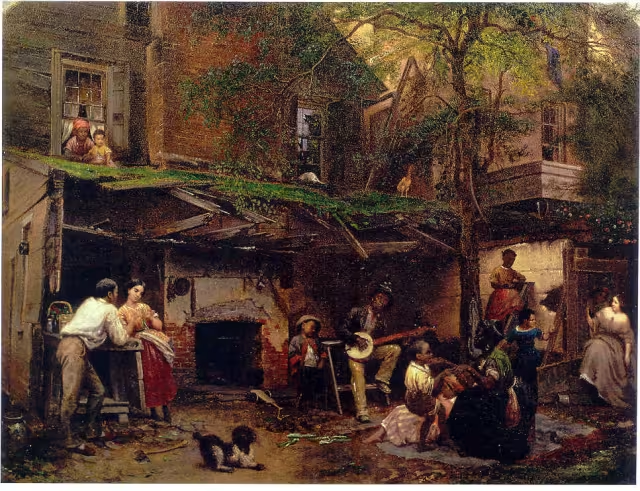
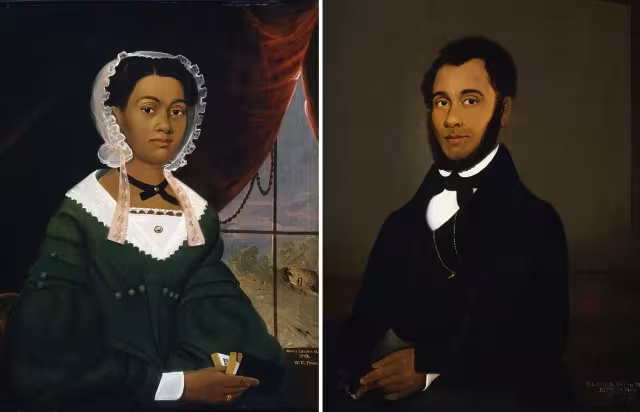
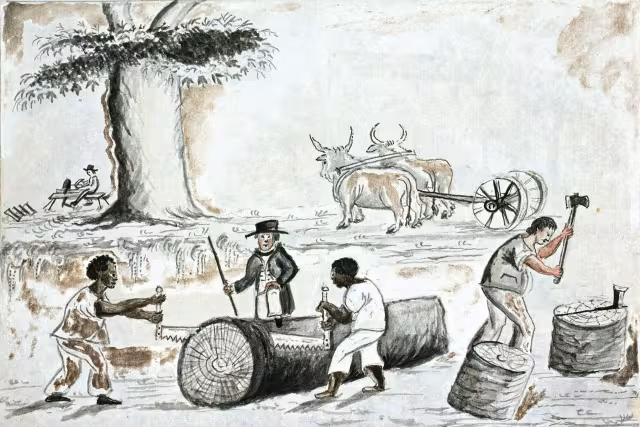
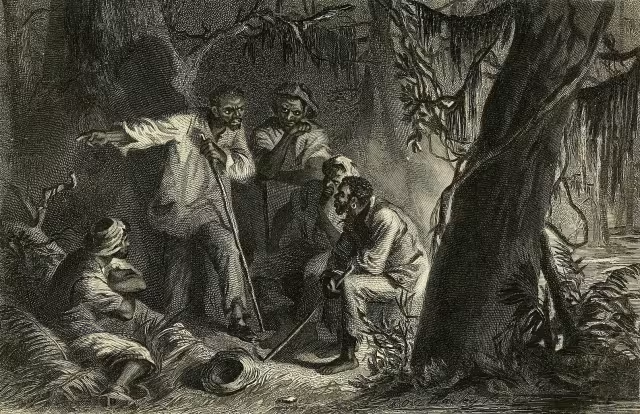
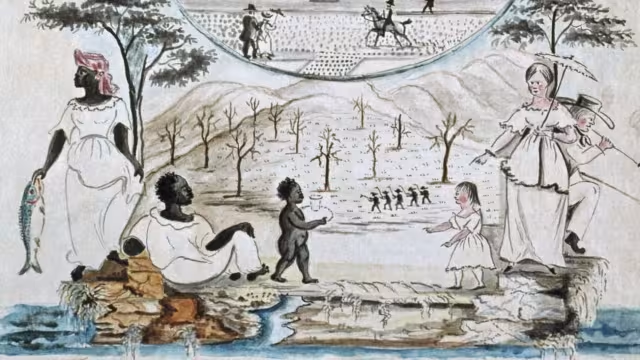
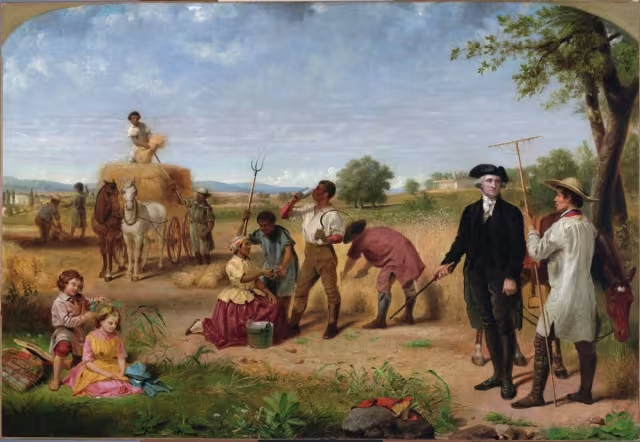
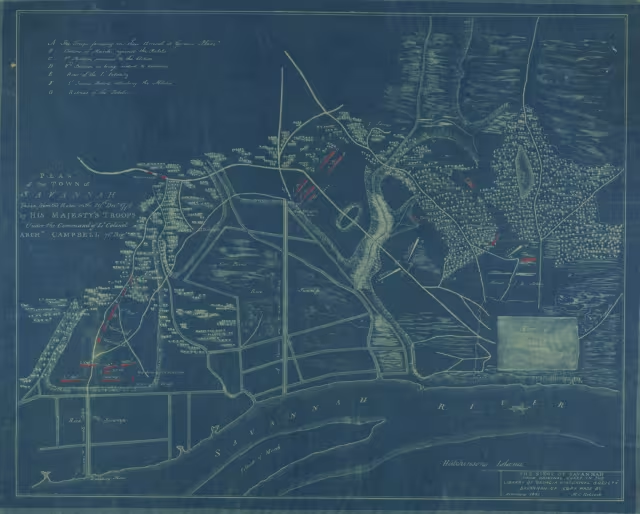
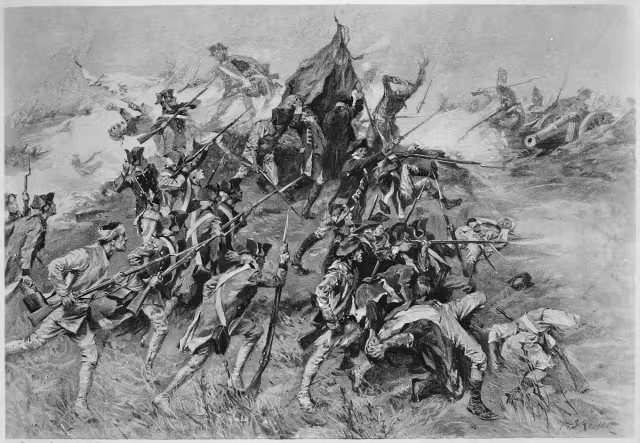
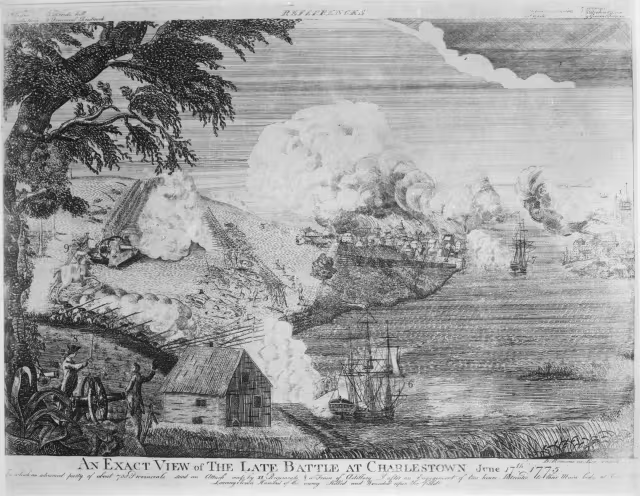
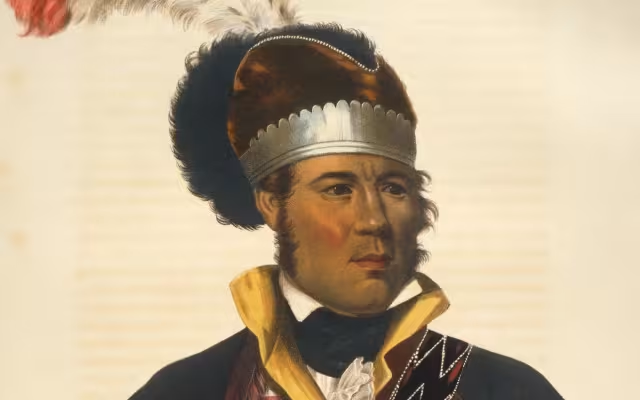
Enslaved and free Black Georgians used the Revolution’s chaos as an opportunity to seek freedom, often by running toward British lines—intuitively understanding that movement away from enslavement offered more hope than staying. Many made their way to Savannah after the British arrived in December 1778, finding new economic opportunities, establishing religious communities, and founding churches whose Savannah congregations still trace their origins to the Revolutionary period. Black soldiers and laborers participated fully in the Siege of Savannah in 1779, carrying muskets, building fortifications, and performing every kind of wartime labor. When the British evacuated in 1782, large numbers of Black Georgians left with them—to Saint Augustine, the West Indies, Nova Scotia, and Canada—a diaspora that brought freedom but rarely security or prosperity. For those who remained, the Revolution’s end often meant a return to conditions barely distinguishable from before.
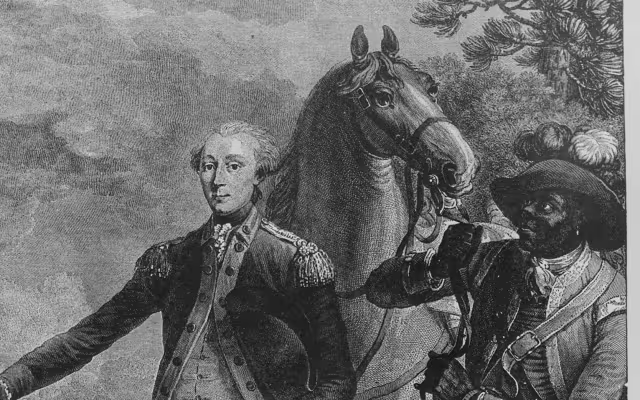
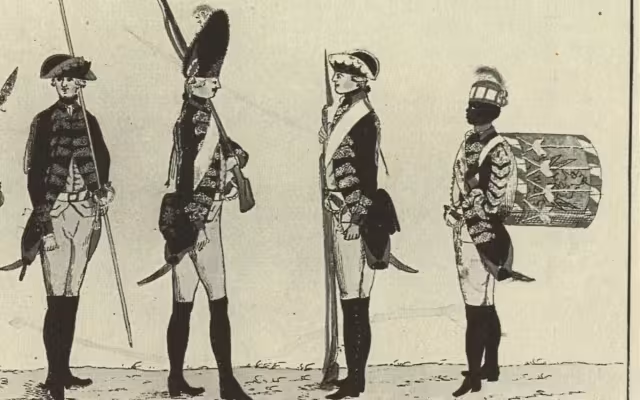
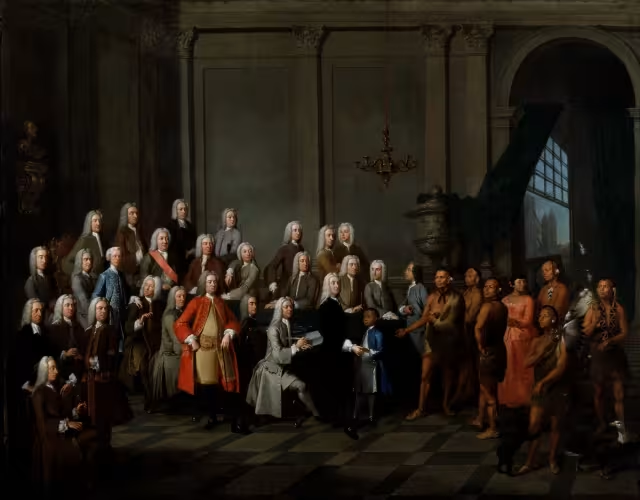
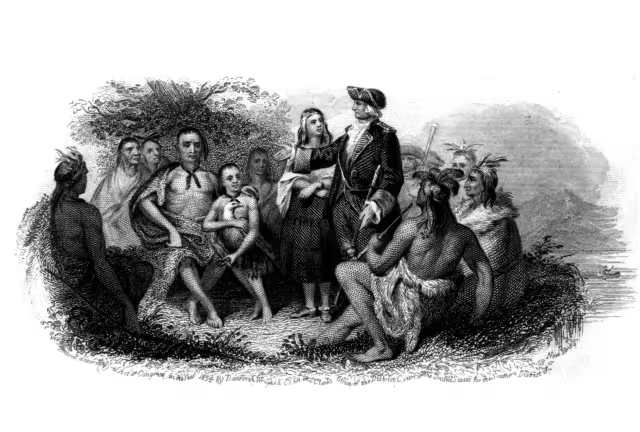
Georgia was the youngest of the thirteen colonies. Founded in 1733 and still heavily dependent on British protection, Loyalism was unusually strong, especially in the backcountry. Flanked by Spanish Florida and powerful Native nations, it was nearly a miracle that Georgia joined the Revolution at all rather than remaining in the Empire. However, by the time the Declaration of Independence reached Savannah in August 1776, attitudes had shifted such that a new radical state constitution was already in the works. The war proved profoundly disruptive. Many enslaved Black Georgians fled toward freedom and left with the British in 1782. Women held families together amid backcountry violence. And Native nations faced dispossession regardless of the outcome. After the war, many Loyalists were quietly reintegrated, eventually celebrating the Fourth of July alongside the Patriots they had once opposed.

More African Americans perspectives

View details
  • Connecticut

    African Americans

    4:57 Just watched
  • Delaware

    African Americans

    5:52 Just watched
  • Maryland

    African Americans

    7:53 Just watched
  • Massachusetts

    African Americans

    11:25 Just watched
  • New Hampshire

    African Americans

    4:51 Just watched
  • New Jersey

    African Americans

    16:16 Just watched
  • New York

    African Americans

    4:16 Just watched
  • North Carolina

    African Americans

    4:29 Just watched
  • Pennsylvania

    African Americans

    6:15 Just watched
  • Rhode Island

    African Americans

    11:20 Just watched
  • South Carolina

    African Americans

    4:19 Just watched
  • Virginia

    African Americans

    7:50 Just watched

More from Georgia

View details
  • Georgia

    Context

    23:01 Just watched
  • Georgia

    Declaration

    26:32 Just watched
  • Georgia

    Memory

    7:26 Just watched
  • Georgia

    Elected officials

    2:11 Just watched
  • Georgia

    Indigenous people

    2:36 Just watched
  • Georgia

    Loyalists

    2:45 Just watched
  • Georgia

    Women

    3:46 Just watched
  • Connecticut
  • Delaware
  • Georgia
  • Maryland
  • Massachusetts
  • New Hampshire
  • New Jersey
  • New York
  • North Carolina
  • Pennsylvania
  • Rhode Island
  • South Carolina
  • Virginia

Perspectives

  • Women
  • African Americans
  • Loyalists
  • Indigenous people
  • Elected officials

About

How was national independence anticipated, debated, and enacted in each of the original 13 states during the American Revolution?

How has national independence, particularly the ideas articulated in the Declaration of Independence, been remembered and invoked over the last 250 years?

Learn more

Bookmarks

    No bookmarks yet. Bookmark a video to save it here.

    0