South Carolina | Perspective

African Americans

Interviewees:
  • Elizabeth Chew
    • CEO, South Carolina Historical Society

South Carolina was the only colony where enslaved Black people made up a majority of the population, and Patriot leaders feared the Revolution would inspire flight, sabotage, or rebellion. The British promised freedom to any enslaved person of a Patriot who reached their lines, and as many as 5,000 formerly enslaved people left with the British when they evacuated Charleston in 1782. The most fully documented life among them is Boston King, who escaped to British lines, sailed to New York, and was eventually resettled in Nova Scotia, and later Sierra Leone. He became a Methodist minister and wrote an autobiography that is one of the era’s essential Black Loyalist sources.
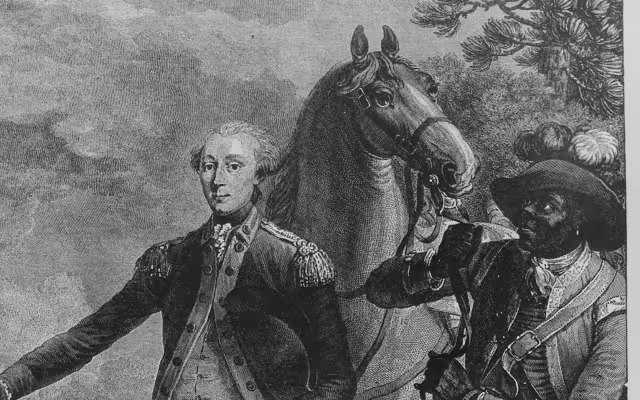
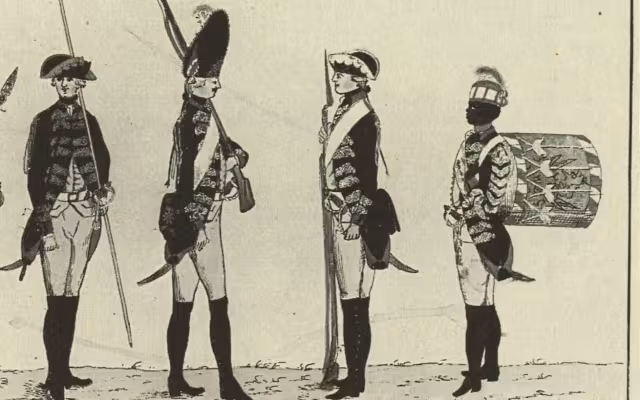
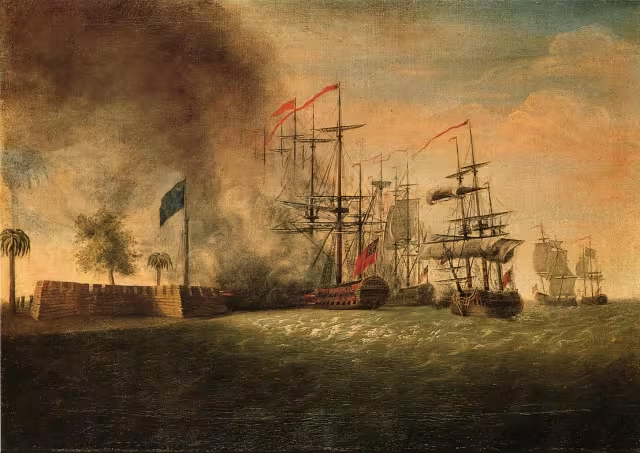
South Carolina was among the wealthiest of the thirteen colonies and the only one where enslaved Black people formed a majority, producing an extraordinarily stratified society divided between Low Country planters and a poorer, marginalized backcountry. It moved toward independence early, building a shadow government and adopting its own constitution in March 1776, months before the Declaration arrived. During the week before the Continental Congress approved the Declaration, Patriots had repelled the British navy at the Battle of Sullivan's Island—still commemorated as Carolina Day. As in many colonies, the Revolution in South Carolina looked as much like a civil war as a war for independence. Roughly a quarter of white residents actively opposed it, and Loyalists fought neighbors at Kings Mountain and Cowpens. Few states saw more battles or greater upheaval. Elite women left a rich documentary record illuminating the complexities of their wartime lives. Throughout the war, Catawba, Cherokee, and Creek struggled with complicated diplomatic choices. In 1782, roughly 5,000 formerly enslaved South Carolinians departed with the British.

More African Americans perspectives

View details
  • Connecticut

    African Americans

    4:57 Just watched
  • Delaware

    African Americans

    5:52 Just watched
  • Georgia

    African Americans

    3:38 Just watched
  • Maryland

    African Americans

    7:53 Just watched
  • Massachusetts

    African Americans

    11:25 Just watched
  • New Hampshire

    African Americans

    4:51 Just watched
  • New Jersey

    African Americans

    16:16 Just watched
  • New York

    African Americans

    4:16 Just watched
  • North Carolina

    African Americans

    4:29 Just watched
  • Pennsylvania

    African Americans

    6:15 Just watched
  • Rhode Island

    African Americans

    11:20 Just watched
  • Virginia

    African Americans

    7:50 Just watched

More from South Carolina

View details
  • South Carolina

    Context

    24:24 Just watched
  • South Carolina

    Declaration

    7:26 Just watched
  • South Carolina

    Memory

    6:20 Just watched
  • South Carolina

    Elected officials

    3:52 Just watched
  • South Carolina

    Indigenous people

    2:58 Just watched
  • South Carolina

    Loyalists

    5:49 Just watched
  • South Carolina

    Women

    Just watched
  • Connecticut
  • Delaware
  • Georgia
  • Maryland
  • Massachusetts
  • New Hampshire
  • New Jersey
  • New York
  • North Carolina
  • Pennsylvania
  • Rhode Island
  • South Carolina
  • Virginia

Perspectives

  • Women
  • African Americans
  • Loyalists
  • Indigenous people
  • Elected officials

About

How was national independence anticipated, debated, and enacted in each of the original 13 states during the American Revolution?

How has national independence, particularly the ideas articulated in the Declaration of Independence, been remembered and invoked over the last 250 years?

Learn more

Bookmarks

    No bookmarks yet. Bookmark a video to save it here.

    0