Maryland | Perspective

African Americans

Interviewees:
  • David Armenti
    • Vice President of Education and Engagement, Maryland Center for History and Culture

Maryland was one of the most diverse colonies on the American mainland at the onset of the Revolution: home to enslaved people, a growing free Black population, various immigrant groups, and several Indigenous communities. Lord Dunmore’s 1775 proclamation in Virginia, which offered enslaved Americans freedom in exchange for service in the British Army, reached across the Chesapeake and prompted hundreds, if not thousands, of enslaved Marylanders to flee to the British. Many served in British regiments, and after the war some were resettled in Nova Scotia and Sierra Leone. More than a hundred African Americans served in Maryland’s Continental units—integrated, not segregated—though archival records rarely noted race, making individuals difficult to trace. A proposal for an all-Black Maryland regiment was voted down by the legislature in 1781. Thomas Carney of the Eastern Shore saved his commanding officer in battle, received honors, and later secured a pension and land allocation. A pseudonymous 1783 editorial in the Maryland Gazette—signed “Vox Africanorum” (Voice of the African)—powerfully argued that African Americans had earned democratic inclusion through their military service and sacrifice.
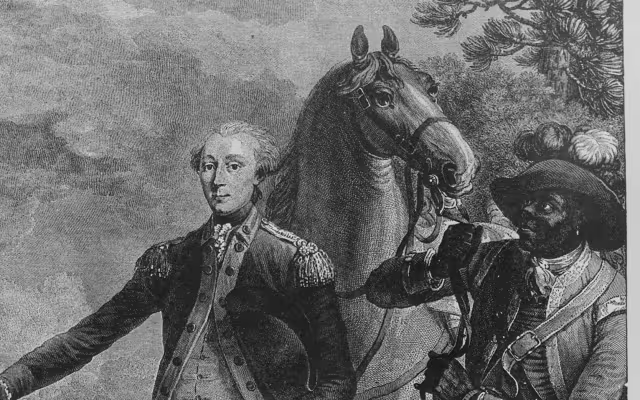
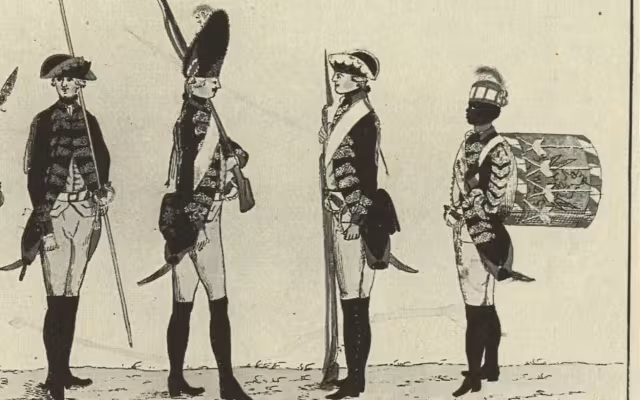
Pre-Revolutionary Maryland centered on Annapolis and increasingly on a fast-growing Baltimore, as the colony’s tobacco economy gradually shifted toward the grain trade and shipping. The colony issued its own declaration of independence on July 6, 1776, and later required free men to swear an Oath of Fidelity to the Patriot cause. Its four signers—Charles Carroll, Samuel Chase, William Paca, and Thomas Stone—were among Maryland's largest enslavers, embodying the Revolution's central contradiction. Baltimore printer Mary Katharine Goddard risked treason by putting her own name on the first broadside listing all the signers. More than one hundred African Americans served in integrated Maryland units and Indigenous communities like the Piscataway, Pocomoke, and Nanticoke endured on the colony's margins. Maryland's memory of independence unfolded across generations of public readings, toasts, and commemorations.

More African Americans perspectives

View details
  • Connecticut

    African Americans

    4:57 Just watched
  • Delaware

    African Americans

    5:52 Just watched
  • Georgia

    African Americans

    3:38 Just watched
  • Massachusetts

    African Americans

    11:25 Just watched
  • New Hampshire

    African Americans

    4:51 Just watched
  • New Jersey

    African Americans

    16:16 Just watched
  • New York

    African Americans

    4:16 Just watched
  • North Carolina

    African Americans

    4:29 Just watched
  • Pennsylvania

    African Americans

    6:15 Just watched
  • Rhode Island

    African Americans

    11:20 Just watched
  • South Carolina

    African Americans

    4:19 Just watched
  • Virginia

    African Americans

    7:50 Just watched

More from Maryland

View details
  • Maryland

    Context

    9:29 Just watched
  • Maryland

    Declaration

    7:31 Just watched
  • Maryland

    Memory

    11:59 Just watched
  • Maryland

    Elected officials

    1:41 Just watched
  • Maryland

    Indigenous people

    1:20 Just watched
  • Maryland

    Women

    2:09 Just watched
  • Connecticut
  • Delaware
  • Georgia
  • Maryland
  • Massachusetts
  • New Hampshire
  • New Jersey
  • New York
  • North Carolina
  • Pennsylvania
  • Rhode Island
  • South Carolina
  • Virginia

Perspectives

  • Women
  • African Americans
  • Loyalists
  • Indigenous people
  • Elected officials

About

How was national independence anticipated, debated, and enacted in each of the original 13 states during the American Revolution?

How has national independence, particularly the ideas articulated in the Declaration of Independence, been remembered and invoked over the last 250 years?

Learn more

Bookmarks

    No bookmarks yet. Bookmark a video to save it here.

    0