Connecticut | Perspective

Women

Interviewees:
  • Natalie Belanger
    • Public Programs Manager, Connecticut Museum of Culture and History

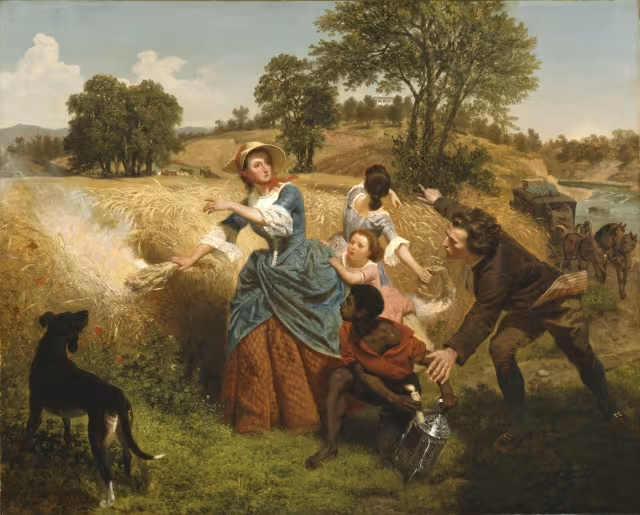
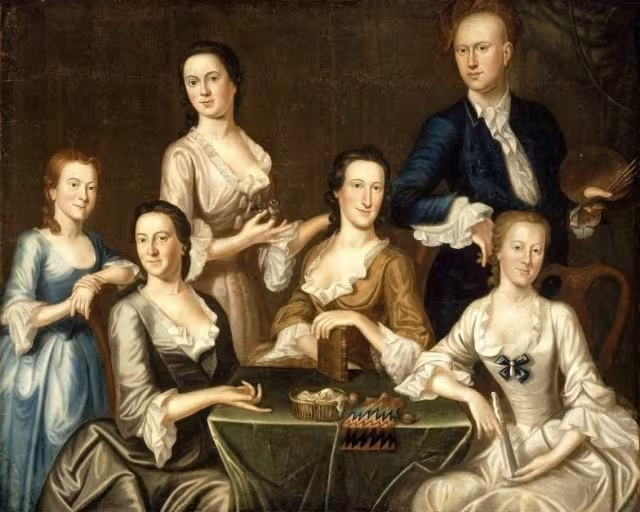
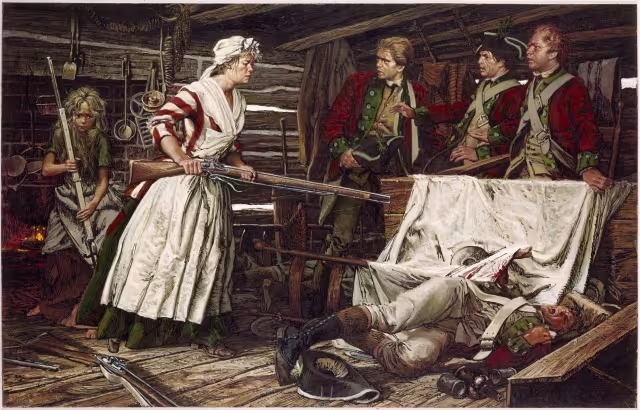
Connecticut women did not face battle or occupation, but with 40,000 men fighting in nearly every campaign, they filled the domestic void, sustaining the farm and textile production that earned the colony its nickname “the Provisions State.” High female literacy left a rich documentary record. The Foote sisters of Colchester logged yarn spun and cloth woven for the war effort. Lois Peters managed a farm, finances, and a pregnancy while her husband Nathan begged from camp for stockings. Faith Trumbull Huntington, the governor's daughter, traveled to Boston during the siege, witnessed the slaughter after Bunker Hill, and took her own life soon after—likely suffering what we would now call PTSD. Hannah Bunce Watson took over the Hartford Courant after her husband died in 1777, running it as one of the war's most pro-Revolution papers. A suspected Loyalist arson destroyed her paper mill in 1778, but the state raised money through a lottery to rebuild it.
Connecticut's fierce commitment to independence sprang from its cherished 1662 charter, which granted an elected governor and an independent judiciary. On June 14, 1776, the Connecticut General Assembly met in Hartford and passed its own resolution for independence. Governor Jonathan Trumbull Sr. was the only colonial governor to back the Patriot cause throughout the entire Revolutionary War. During the war, Connecticut’s farm economy pivoted to supplying the Continental Army, earning the nickname “the Provisions State.” Four Connecticut delegates to the Continental Congress signed the Declaration of Independence, including Roger Sherman, the only founder to sign all four foundational documents. High literacy allowed women like Hannah Bunce Watson, who ran a pro-Revolution newspaper, to create a rich documentary record. African Americans took names like Freedom and Liberty and sued for their freedom, and the state's Native peoples—among the most enthusiastic Patriots—served in the military in large numbers, yet lost reservation lands after the war.

More Women perspectives

View details
  • Delaware

    Women

    6:16 Just watched
  • Georgia

    Women

    3:46 Just watched
  • Maryland

    Women

    2:09 Just watched
  • Massachusetts

    Women

    4:18 Just watched
  • New Hampshire

    Women

    4:50 Just watched
  • New York

    Women

    5:38 Just watched
  • North Carolina

    Women

    5:33 Just watched
  • Rhode Island

    Women

    9:31 Just watched
  • South Carolina

    Women

    Just watched
  • Virginia

    Women

    8:24 Just watched

More from Connecticut

View details
  • Connecticut

    Context

    8:23 Just watched
  • Connecticut

    Declaration

    8:48 Just watched
  • Connecticut

    Memory

    12:04 Just watched
  • Connecticut

    African Americans

    4:57 Just watched
  • Connecticut

    Elected officials

    6:28 Just watched
  • Connecticut

    Indigenous people

    10:58 Just watched
  • Connecticut

    Loyalists

    3:53 Just watched
  • Connecticut
  • Delaware
  • Georgia
  • Maryland
  • Massachusetts
  • New Hampshire
  • New Jersey
  • New York
  • North Carolina
  • Pennsylvania
  • Rhode Island
  • South Carolina
  • Virginia

Perspectives

  • Women
  • African Americans
  • Loyalists
  • Indigenous people
  • Elected officials

About

How was national independence anticipated, debated, and enacted in each of the original 13 states during the American Revolution?

How has national independence, particularly the ideas articulated in the Declaration of Independence, been remembered and invoked over the last 250 years?

Learn more

Bookmarks

    No bookmarks yet. Bookmark a video to save it here.

    0