Connecticut | Perspective

Indigenous people

Interviewees:
  • Katherine Hermes
    • Professor Emeritus, Central Connecticut State University
    • Publisher of Connecticut Explored

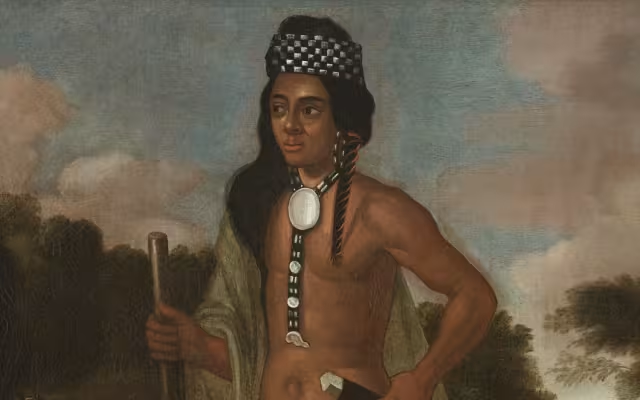
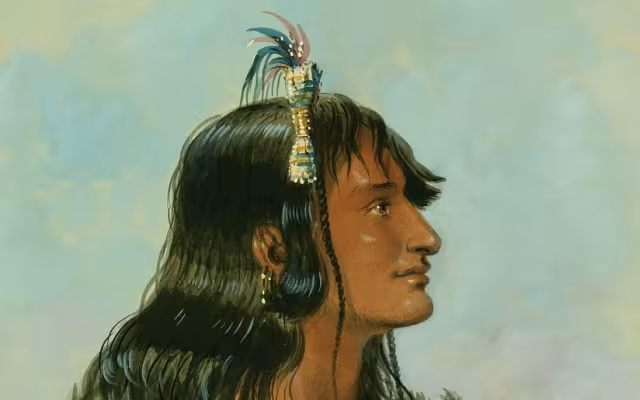
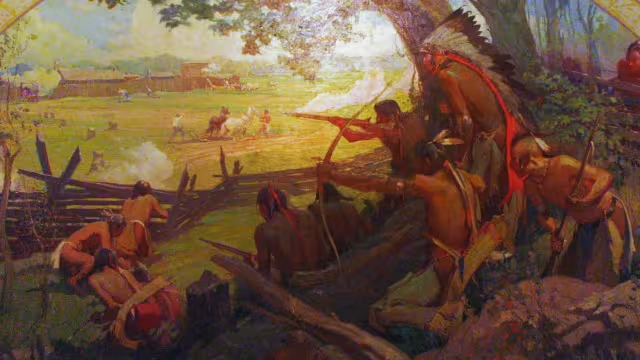
Connecticut's Native peoples—among them the Mohegan, Mashantucket and Eastern Pequot, Quinnipiac, Wangunk, Tunxis, and Schaghticoke—were among the Patriot cause's most enthusiastic supporters, enlisting in proportionally large numbers in a fully integrated army. Many had been educated at Moor's Charity School or Joseph Johnson's school in Farmington, and many belonged to the Brothertown movement, founded by Mohegan minister Samson Occom to create a Christian Native community on Oneida lands in New York. Captain Daniel Nimham organized an Indian Corps under the Continental Army. It was largely destroyed at the Battle of Kingsbridge in August 1778. Judith Lines of Windham, of Native descent, served as a camp follower and laundress, contracted smallpox, and left a rich pension record. Despite their service, Connecticut's Native peoples lost reservation lands after the war, and many joined the Brothertown migration to Oneida and eventually Wisconsin, where a significant community still resides.
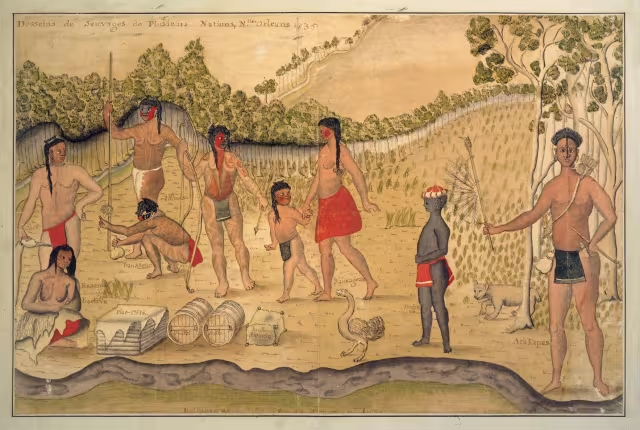
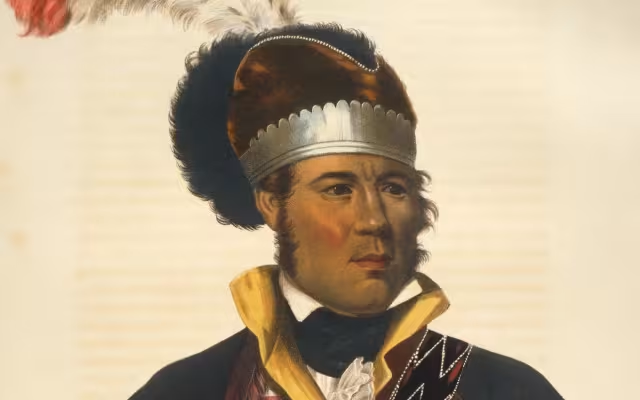
Connecticut's fierce commitment to independence sprang from its cherished 1662 charter, which granted an elected governor and an independent judiciary. On June 14, 1776, the Connecticut General Assembly met in Hartford and passed its own resolution for independence. Governor Jonathan Trumbull Sr. was the only colonial governor to back the Patriot cause throughout the entire Revolutionary War. During the war, Connecticut’s farm economy pivoted to supplying the Continental Army, earning the nickname “the Provisions State.” Four Connecticut delegates to the Continental Congress signed the Declaration of Independence, including Roger Sherman, the only founder to sign all four foundational documents. High literacy allowed women like Hannah Bunce Watson, who ran a pro-Revolution newspaper, to create a rich documentary record. African Americans took names like Freedom and Liberty and sued for their freedom, and the state's Native peoples—among the most enthusiastic Patriots—served in the military in large numbers, yet lost reservation lands after the war.

More Indigenous people perspectives

View details
  • Delaware

    Indigenous people

    3:11 Just watched
  • Georgia

    Indigenous people

    2:36 Just watched
  • Maryland

    Indigenous people

    1:20 Just watched
  • Massachusetts

    Indigenous people

    3:34 Just watched
  • New Hampshire

    Indigenous people

    3:49 Just watched
  • New York

    Indigenous people

    4:24 Just watched
  • North Carolina

    Indigenous people

    4:28 Just watched
  • Pennsylvania

    Indigenous people

    2:43 Just watched
  • Rhode Island

    Indigenous people

    5:31 Just watched
  • South Carolina

    Indigenous people

    2:58 Just watched
  • Virginia

    Indigenous people

    5:35 Just watched

More from Connecticut

View details
  • Connecticut

    Context

    8:23 Just watched
  • Connecticut

    Declaration

    8:48 Just watched
  • Connecticut

    Memory

    12:04 Just watched
  • Connecticut

    African Americans

    4:57 Just watched
  • Connecticut

    Elected officials

    6:28 Just watched
  • Connecticut

    Loyalists

    3:53 Just watched
  • Connecticut

    Women

    6:18 Just watched
  • Connecticut
  • Delaware
  • Georgia
  • Maryland
  • Massachusetts
  • New Hampshire
  • New Jersey
  • New York
  • North Carolina
  • Pennsylvania
  • Rhode Island
  • South Carolina
  • Virginia

Perspectives

  • Women
  • African Americans
  • Loyalists
  • Indigenous people
  • Elected officials

About

How was national independence anticipated, debated, and enacted in each of the original 13 states during the American Revolution?

How has national independence, particularly the ideas articulated in the Declaration of Independence, been remembered and invoked over the last 250 years?

Learn more

Bookmarks

    No bookmarks yet. Bookmark a video to save it here.

    0