Theme
Declaration
The physical arrival of the Declaration of Independence varied widely across the colonies, but almost everywhere it produced a combination of public ceremony, military display, and contested private reaction that revealed how much was already at stake.
The forms of public proclamation reflected each colony's political culture. Rhode Island printed copies for each of its thirty-nine town clerks and directed them to read the document at town meetings—a deliberately local, consent-of-the-governed process. Massachusetts ordered ministers of every denomination to read it from their pulpits before delivering it to town clerks. South Carolina read it publicly three times in Charleston on August 5, at the State House, the Exchange Building, and under the Liberty Tree. Georgia's reading, on August 10, came to a colony whose own newspaper had largely stopped printing, making the public ceremony itself the primary medium.
Private responses ranged just as widely. Philadelphia Quaker Loyalist Sarah Logan Fisher called the city's first July 4th celebration "terrifying," recording fifteen broken windows after she refused to illuminate her house. And yet across nearly every colony, a significant share of the population responded to the Declaration with something like what Virginia observers described as "universal shouts of joy," understanding that a colonial dispute had become something larger, and irreversible.
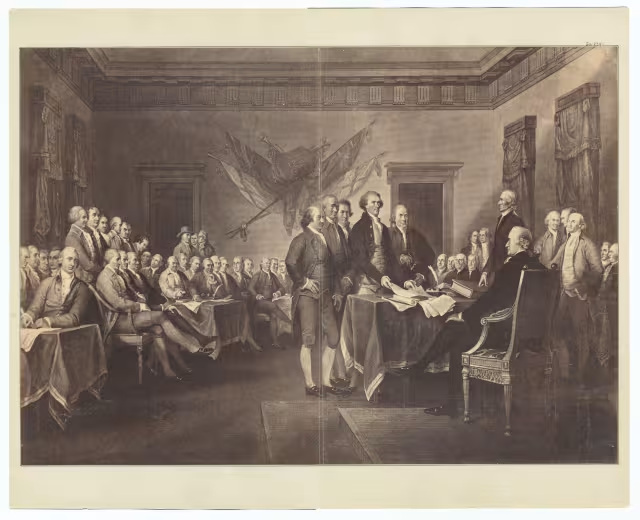
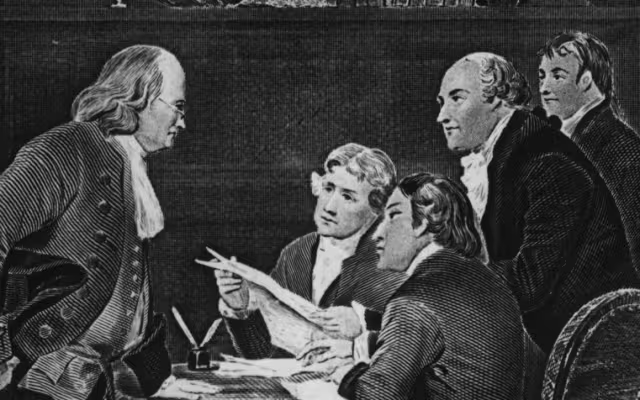
Image source: The Declaration of Independence lithograph by Napoleon Sarony after John Trumbull, circa 1843–1853, Smithsonian National Museum of American History.
- Connecticut
Declaration
- Delaware
Declaration
- Georgia
Declaration
- Maryland
Declaration
- Massachusetts
Declaration
- New Hampshire
Declaration
- New Jersey
Declaration
- New York
Declaration
- North Carolina
Declaration
- Pennsylvania
Declaration
- Rhode Island
Declaration
- South Carolina
Declaration
- Virginia
Declaration