New Jersey | Theme

Declaration

Interviewees:
  • William Krakower
    • Resource Interpretive Specialist, Princeton Battlefield State Park
  • Todd Braisted
    • Royal Provincial Research

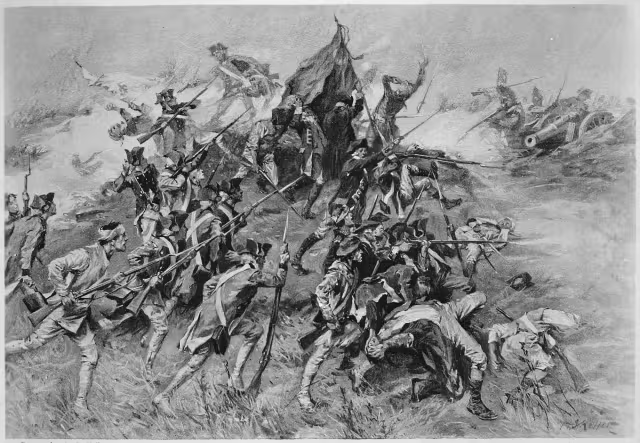
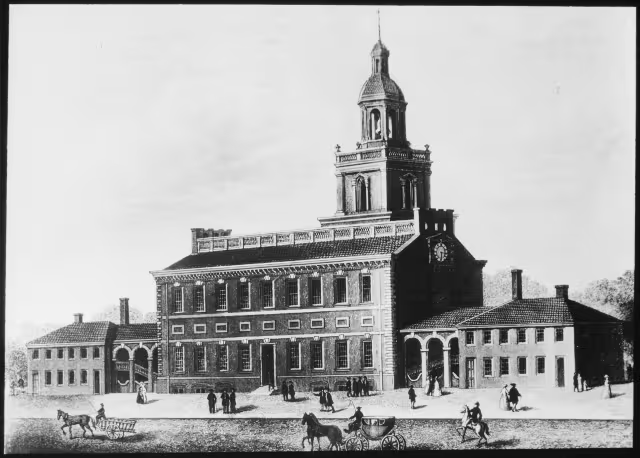
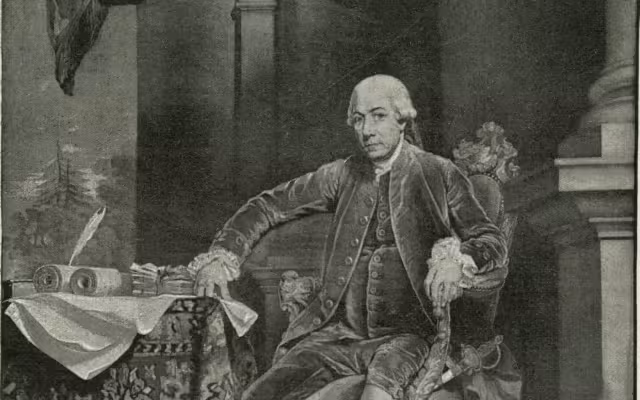
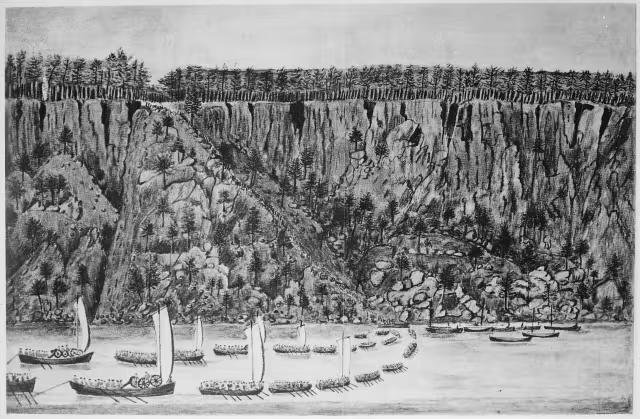
When news of independence reached New Jersey in July 1776, the state faced extraordinary military pressure: tens of thousands of British and Hessian troops massed on Staten Island, Loyalists from Monmouth County rowing out to greet them, and royal governor William Franklin recently placed under house arrest for trying to convene the loyal assembly. An extralegal Provincial Congress under Samuel Tucker served as the de facto government, and the Declaration instantly created a crisis of legitimacy. Signer Richard Stockton of Princeton, captured by Loyalist forces late in 1776, signed an oath of allegiance to the Crown within weeks. He then recanted after the Continental Army's victories at Trenton and Princeton shifted the balance. Allegiances across the state fluctuated with whichever army held a given territory, and property protection often mattered as much as conviction. As the “Crossroads of the American Revolution,” with more battles fought on its soil than any other state, New Jersey experienced independence less as a single moment than a prolonged, contested struggle.
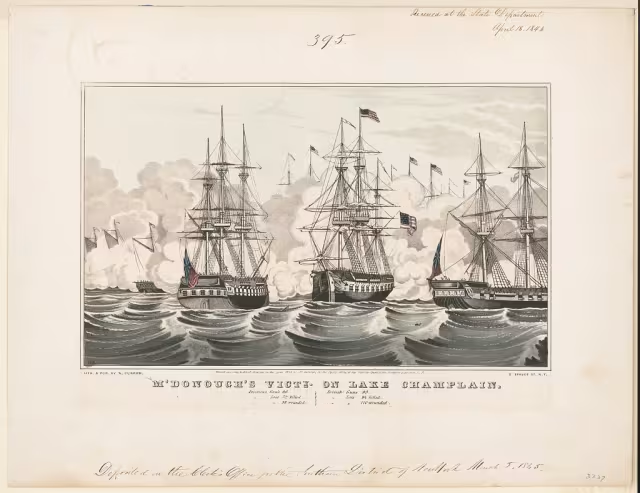
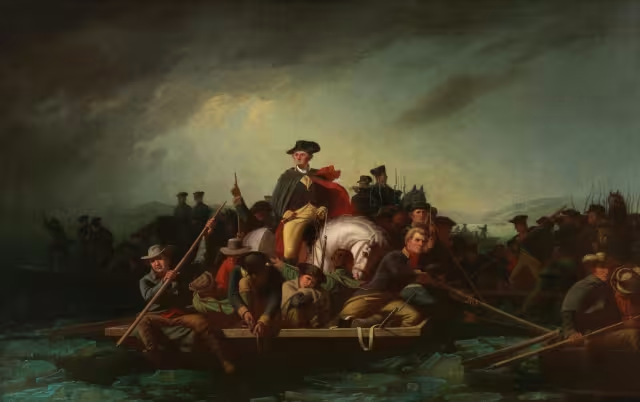
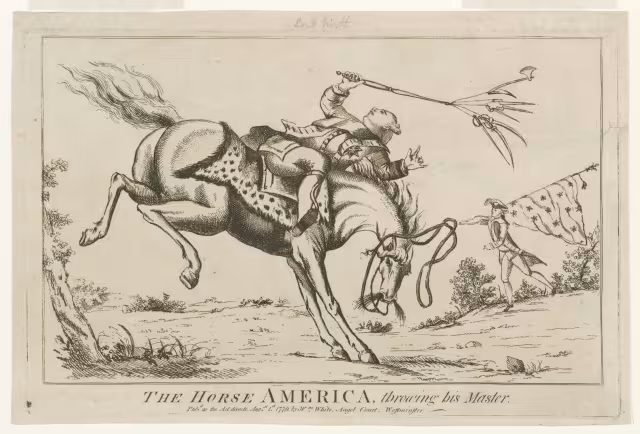
New Jersey was home to a mixed economy (agrarian, ironworks, and lumber) and it was a place where contradictory views regarding race, class, gender, and loyalty played out in conflicts throughout the state, earning the nickname, the “Crossroads of the American Revolution.” When independence came in July 1776, the state faced extraordinary military pressure as British and Hessian troops massed nearby, and it saw more battles on its soil than any other state. Allegiances shifted constantly—even Declaration signer Richard Stockton briefly swore an oath to the Crown—and at times Loyalists outnumbered Patriots. The state, like all others, embodied a stark contradiction regarding liberty. Colonists decried British “slavery” while enslaving thousands. Enslaved men like Cudjo Banquante won freedom through service, while others such as Colonel Tye fought for the British. 

More Declaration themes

View details
  • Connecticut

    Declaration

    8:48 Just watched
  • Delaware

    Declaration

    19:52 Just watched
  • Georgia

    Declaration

    26:32 Just watched
  • Maryland

    Declaration

    7:31 Just watched
  • Massachusetts

    Declaration

    9:20 Just watched
  • New Hampshire

    Declaration

    12:50 Just watched
  • New York

    Declaration

    13:22 Just watched
  • North Carolina

    Declaration

    5:54 Just watched
  • Pennsylvania

    Declaration

    23:24 Just watched
  • Rhode Island

    Declaration

    7:42 Just watched
  • South Carolina

    Declaration

    7:26 Just watched
  • Virginia

    Declaration

    23:28 Just watched

More from New Jersey

View details
  • New Jersey

    Context

    21:48 Just watched
  • New Jersey

    Memory

    5:22 Just watched
  • New Jersey

    African Americans

    16:16 Just watched
  • New Jersey

    Elected officials

    12:27 Just watched
  • New Jersey

    Loyalists

    7:19 Just watched
  • Connecticut
  • Delaware
  • Georgia
  • Maryland
  • Massachusetts
  • New Hampshire
  • New Jersey
  • New York
  • North Carolina
  • Pennsylvania
  • Rhode Island
  • South Carolina
  • Virginia

Perspectives

  • Women
  • African Americans
  • Loyalists
  • Indigenous people
  • Elected officials

About

How was national independence anticipated, debated, and enacted in each of the original 13 states during the American Revolution?

How has national independence, particularly the ideas articulated in the Declaration of Independence, been remembered and invoked over the last 250 years?

Learn more

Bookmarks

    No bookmarks yet. Bookmark a video to save it here.

    0