New Jersey | Perspective

Elected officials

Interviewees:
  • William Krakower
    • Resource Interpretive Specialist, Princeton Battlefield State Park
  • Todd Braisted
    • Royal Provincial Research

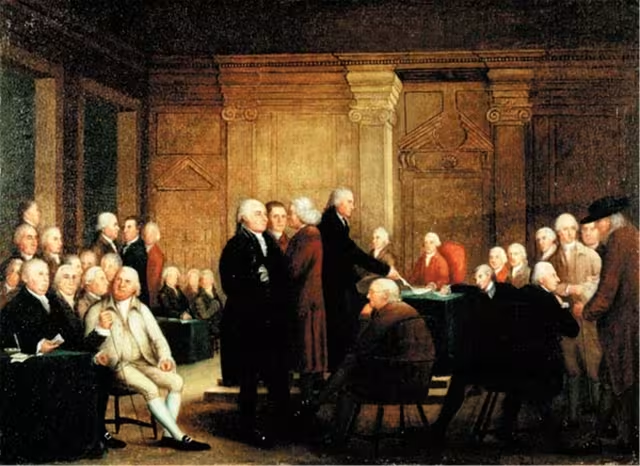
New Jersey's politicians in 1776 were divided by the same loyalties fracturing the broader population. Richard Stockton, a Declaration signer and Princeton's most eminent citizen, was captured late in 1776 by a Loyalist unit formed from Monmouth County men who had joined the British. Imprisoned in New York, he signed an oath of allegiance to the Crown and was released. This moment was later overlooked by commemorators who remembered only the signer, not the oath. The Demarest family of Bergen County illustrated the same divided loyalty: David Demarest, a Loyalist, joined the British while his wife and son served the Patriot cause. When confiscation laws were applied, the family home was seized because it stood in the husband's name, leaving a Patriot wife and son without recourse, a stark illustration of how Revolutionary-era laws failed to protect women.
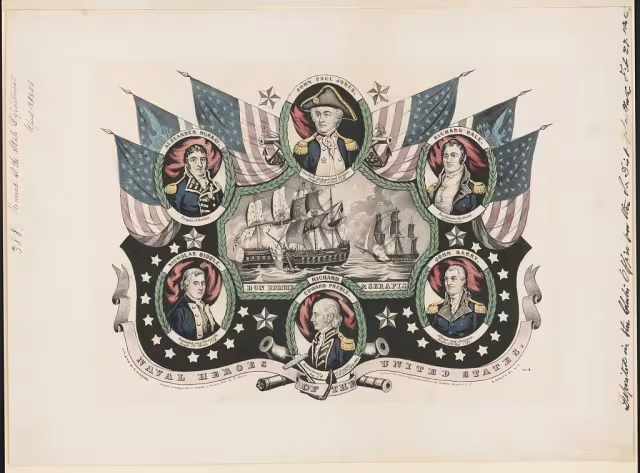
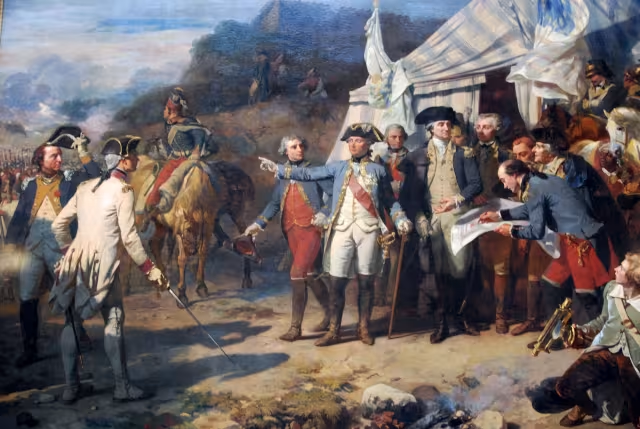
New Jersey was home to a mixed economy (agrarian, ironworks, and lumber) and it was a place where contradictory views regarding race, class, gender, and loyalty played out in conflicts throughout the state, earning the nickname, the “Crossroads of the American Revolution.” When independence came in July 1776, the state faced extraordinary military pressure as British and Hessian troops massed nearby, and it saw more battles on its soil than any other state. Allegiances shifted constantly—even Declaration signer Richard Stockton briefly swore an oath to the Crown—and at times Loyalists outnumbered Patriots. The state, like all others, embodied a stark contradiction regarding liberty. Colonists decried British “slavery” while enslaving thousands. Enslaved men like Cudjo Banquante won freedom through service, while others such as Colonel Tye fought for the British. 

More Elected officials perspectives

View details
  • Connecticut

    Elected officials

    6:28 Just watched
  • Delaware

    Elected officials

    12:52 Just watched
  • Georgia

    Elected officials

    2:11 Just watched
  • Maryland

    Elected officials

    1:41 Just watched
  • Massachusetts

    Elected officials

    4:26 Just watched
  • New Hampshire

    Elected officials

    5:27 Just watched
  • New York

    Elected officials

    2:51 Just watched
  • North Carolina

    Elected officials

    4:36 Just watched
  • Pennsylvania

    Elected officials

    3:02 Just watched
  • Rhode Island

    Elected officials

    4:15 Just watched
  • South Carolina

    Elected officials

    3:52 Just watched
  • Virginia

    Elected officials

    7:01 Just watched

More from New Jersey

View details
  • New Jersey

    Context

    21:48 Just watched
  • New Jersey

    Declaration

    11:53 Just watched
  • New Jersey

    Memory

    5:22 Just watched
  • New Jersey

    African Americans

    16:16 Just watched
  • New Jersey

    Loyalists

    7:19 Just watched
  • Connecticut
  • Delaware
  • Georgia
  • Maryland
  • Massachusetts
  • New Hampshire
  • New Jersey
  • New York
  • North Carolina
  • Pennsylvania
  • Rhode Island
  • South Carolina
  • Virginia

Perspectives

  • Women
  • African Americans
  • Loyalists
  • Indigenous people
  • Elected officials

About

How was national independence anticipated, debated, and enacted in each of the original 13 states during the American Revolution?

How has national independence, particularly the ideas articulated in the Declaration of Independence, been remembered and invoked over the last 250 years?

Learn more

Bookmarks

    No bookmarks yet. Bookmark a video to save it here.

    0