New York | Theme

Context

Interviewees:
  • Julie Golia
    • Linda May Uris Director, Humanities and Social Sciences Research Library, New York Public Library
  • Meredith Mann
    • Interim Charles J. Liebman Curator of Manuscripts, New York Public Library

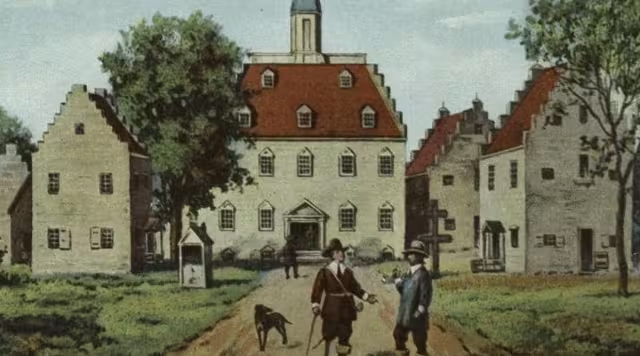
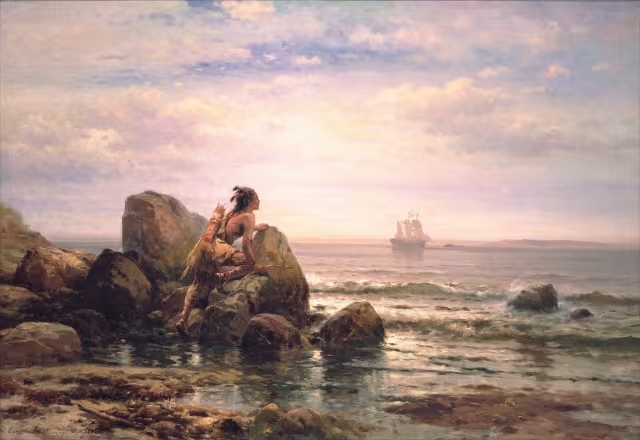
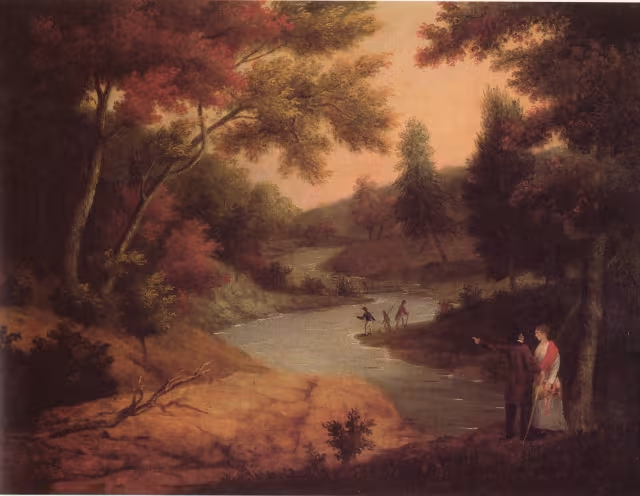
New York in the Revolutionary Era was cosmopolitan, multilingual, and deeply mercantile. Because New York City had deep commercial ties to Britain, New York was among the most Loyalist of all the colonies and one of the slowest to embrace independence. The Stamp Act crisis sparked the first broad popular resistance, with violent street reactions from the Sons of Liberty standing in sharp tension with a wealthy merchant class whose livelihoods depended on British trade. The Battle of Golden Hill in 1770—sparked by British soldiers competing with colonists for jobs—preceded the Boston Massacre and was very much a New York story of two opposing groups forced to live in close proximity. The colony's thriving print culture, with Patriot printer John Holt and Loyalist James Rivington as contrasting voices, was essential to the circulation of Revolutionary ideas. New York State comprised very different worlds: the dense commercial port at Manhattan's southern tip, and the vast western interior where the Haudenosaunee Confederacy, known to the British as the Six Nations, had tremendous influence.
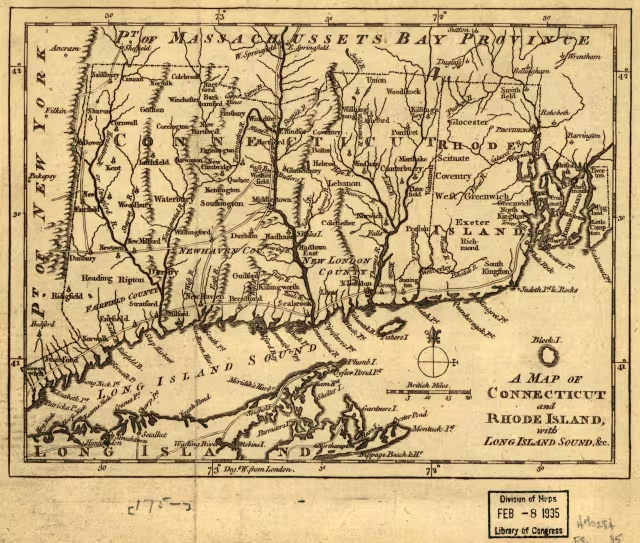
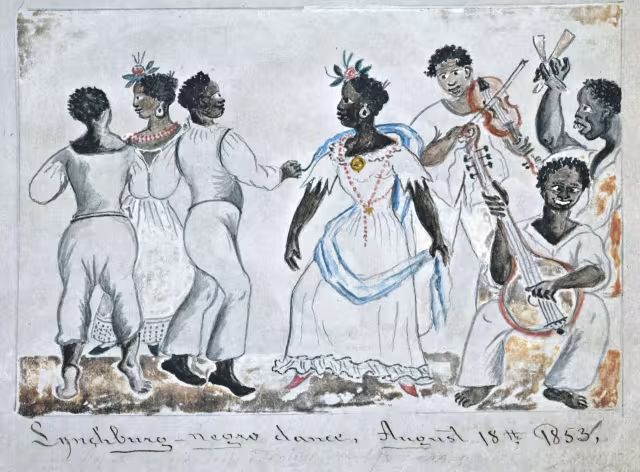
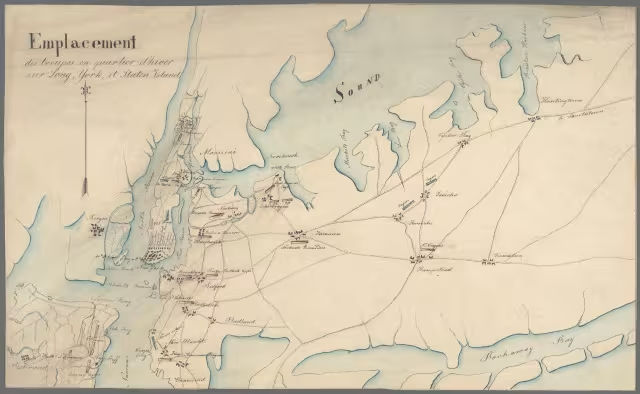
New York was cosmopolitan, mercantile, and arguably the most Loyalist of the colonies, with its merchant class bound to Britain by trade. It was among the slowest to embrace independence, acknowledging the Declaration only on July 9, 1776, after which crowds toppled the nearby gilded statue of King George III and melted it down for ammunition. Soon after, the British army captured New York City and made it its military headquarters. The city remained occupied for seven years. The state produced contrasting leaders in Alexander Hamilton and George Clinton, vivid voices like the Quaker poet Hannah Lawrence, and fluid loyalties embodied by printer James Rivington. Slavery was omnipresent in New York City as well as in rural areas of the state. Black Loyalists like Boston King self-emancipated to British-occupied New York City and faced acute uncertainty about their postwar future. Upstate, the war fractured the Haudenosaunee Confederacy, and the second Treaty of Fort Stanwix saw Americans negotiate in the posture of conquerors rather than equals.

More Context themes

View details
  • Connecticut

    Context

    8:23 Just watched
  • Delaware

    Context

    6:06 Just watched
  • Georgia

    Context

    23:01 Just watched
  • Maryland

    Context

    9:29 Just watched
  • Massachusetts

    Context

    18:34 Just watched
  • New Hampshire

    Context

    26:20 Just watched
  • New Jersey

    Context

    21:48 Just watched
  • North Carolina

    Context

    13:02 Just watched
  • Pennsylvania

    Context

    23:13 Just watched
  • Rhode Island

    Context

    23:52 Just watched
  • South Carolina

    Context

    24:24 Just watched
  • Virginia

    Context

    27:42 Just watched

More from New York

View details
  • New York

    Declaration

    13:22 Just watched
  • New York

    Memory

    8:05 Just watched
  • New York

    African Americans

    4:16 Just watched
  • New York

    Elected officials

    2:51 Just watched
  • New York

    Indigenous people

    4:24 Just watched
  • New York

    Loyalists

    4:15 Just watched
  • New York

    Women

    5:38 Just watched
  • Connecticut
  • Delaware
  • Georgia
  • Maryland
  • Massachusetts
  • New Hampshire
  • New Jersey
  • New York
  • North Carolina
  • Pennsylvania
  • Rhode Island
  • South Carolina
  • Virginia

Perspectives

  • Women
  • African Americans
  • Loyalists
  • Indigenous people
  • Elected officials

About

How was national independence anticipated, debated, and enacted in each of the original 13 states during the American Revolution?

How has national independence, particularly the ideas articulated in the Declaration of Independence, been remembered and invoked over the last 250 years?

Learn more

Bookmarks

    No bookmarks yet. Bookmark a video to save it here.

    0