Theme
Memory
Across the thirteen states, the Declaration's memory was neither static nor universally celebrated. It was an argument, renewed in every generation, about what the founding document’s claims regarding individual rights and equality actually meant and who they included.
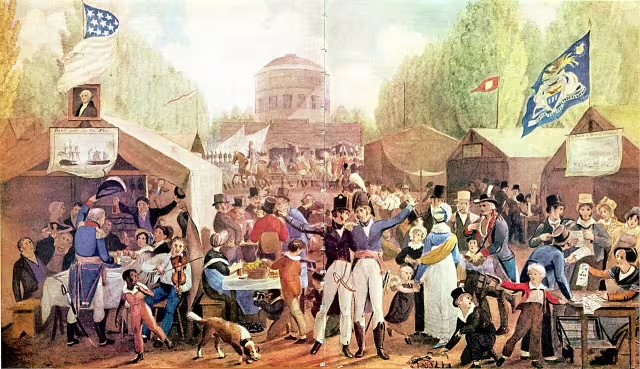
The earliest anniversary observances shared a common vocabulary: cannon fire, bell ringing, parades, formal toasts numbering exactly thirteen, and public readings of the Declaration. The simultaneous deaths of Jefferson and Adams on July 4, 1826—the Jubilee—deepened the date's mythic resonance across every state. But the Civil War cracked that resonance along regional lines. South Carolinians abandoned July 4 as "the enemy's holiday." Virginia became the Confederate capital, even as Union forces at Fort Monroe—where escaping enslaved people had catalyzed the Emancipation Proclamation—invoked the same Revolutionary inheritance. After emancipation, it was African American communities in South Carolina, Georgia, and elsewhere that most visibly and persistently carried the Declaration's meaning forward through public readings, parades, and oratory.
The Declaration was also reclaimed, repeatedly, as a protest document by those the founding generation had excluded. Massachusetts reformers William Lloyd Garrison and Wendell Phillips invoked it repeatedly in speeches against slavery. After the Civil War, Connecticut's Smith Sisters and New Jersey suffragist Lucy Stone quoted it before state legislatures to argue for women's rights. Rhode Island's 1976 Bicentennial became the occasion for the state's first gay pride parade, linking the Declaration's promise of liberty directly to the colony's founding commitment to liberty of conscience. In each case, the document's power lay not in what it had already accomplished but in what it still promised.
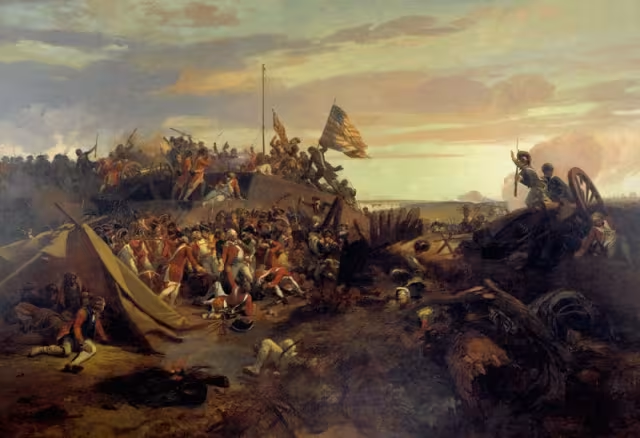
Image source: “The Passage of the Delaware,” Thomas Sully (1819), Wikimedia Commons.