Virginia | Perspective

Loyalists

Interviewees:
  • Maggie Creech
    • Director of Education, Virginia Museum of History and Culture
  • James Herrera-Brookes
    • Melanie Trent De Schutter Senior Director of Research & Publications, Virginia Museum of History and Culture

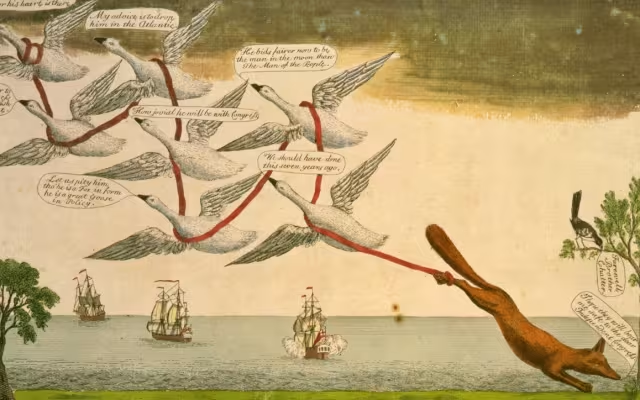
Virginia was less a Loyalist stronghold than New York or Charleston. The main exception was Norfolk’s merchant community, though the city was largely destroyed early in the war after Patriots razed the city following a British bombardment. John Randolph, brother of Patriot leader Peyton Randolph, left Virginia with Dunmore and wrote to Jefferson in 1779 urging him to “rescind your Declaration of Independence,” dying in England and only returning to Virginia when posthumously reinterred there. Nicholas Cresswell, an English visitor from 1774 to 1777, called Washington a dictator and documented the social violence facing suspected Tories. Charlotte Thornton, a widow, departed for England before the Declaration, citing loyalty as her reason. George and Isabella Logan sheltered Dunmore under social pressure and faced community reprisals. Shadrach Furman, a prosperous free Black man who sided with the British, was beaten, lost his property, and petitioned the Crown from London in poverty—illustrating the particular vulnerability of Black Loyalists, many of whom ended up scattered across the Atlantic World in Nova Scotia, London, and Sierra Leone.
Virginia was the largest and most populous of the thirteen colonies, home to leading Patriots like Thomas Jefferson, Patrick Henry, and George Washington. It was also one of the most wealthy. Royal authority collapsed early when Lord Dunmore fled and issued his 1775 proclamation offering freedom to enslaved people who fought for Britain—the single most radicalizing event in the colony in the lead up to the American Revolution. By July 1776, Virginia had adopted George Mason's Declaration of Rights and a new state constitution, and news of independence drew jubilant crowds while committees of safety suppressed dissent. The Revolution's promise and its complexities ran deep: enslaved Virginians fled to British lines and fought for the British Army, while, at the same time, portions of enslaved and free Black Virginians fought for the Patriot cause, serving with distinction; women channeled Patriotism into boycotts and home-front management, while continuing to live under oppressive patriarchal norms; and Native nations like the Pamunkey and Shawnee made difficult diplomatic choices among competing powers. Across the centuries that followed, from emancipation to civil rights, Virginians of every background returned to the Declaration as a contested but enduring measure of the nation's ideals.

More Loyalists perspectives

View details
  • Connecticut

    Loyalists

    3:53 Just watched
  • Delaware

    Loyalists

    7:56 Just watched
  • Georgia

    Loyalists

    2:45 Just watched
  • Massachusetts

    Loyalists

    4:39 Just watched
  • New Hampshire

    Loyalists

    4:43 Just watched
  • New Jersey

    Loyalists

    7:19 Just watched
  • New York

    Loyalists

    4:15 Just watched
  • North Carolina

    Loyalists

    4:56 Just watched
  • Rhode Island

    Loyalists

    2:52 Just watched
  • South Carolina

    Loyalists

    5:49 Just watched

More from Virginia

View details
  • Virginia

    Context

    27:42 Just watched
  • Virginia

    Declaration

    23:28 Just watched
  • Virginia

    Memory

    20:20 Just watched
  • Virginia

    African Americans

    7:50 Just watched
  • Virginia

    Elected officials

    7:01 Just watched
  • Virginia

    Indigenous people

    5:35 Just watched
  • Virginia

    Women

    8:24 Just watched
  • Connecticut
  • Delaware
  • Georgia
  • Maryland
  • Massachusetts
  • New Hampshire
  • New Jersey
  • New York
  • North Carolina
  • Pennsylvania
  • Rhode Island
  • South Carolina
  • Virginia

Perspectives

  • Women
  • African Americans
  • Loyalists
  • Indigenous people
  • Elected officials

About

How was national independence anticipated, debated, and enacted in each of the original 13 states during the American Revolution?

How has national independence, particularly the ideas articulated in the Declaration of Independence, been remembered and invoked over the last 250 years?

Learn more

Bookmarks

    No bookmarks yet. Bookmark a video to save it here.

    0