Rhode Island | Perspective

Loyalists

Interviewees:
  • C. Morgan Grefe
    • Executive Director, Rhode Island Historical Society
  • Richard Ring
    • Senior Director for Library & Museum Collections, Rhode Island Historical Society

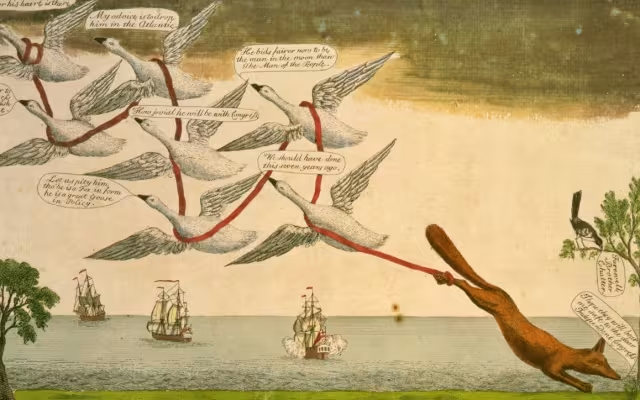
Newport was the center of Rhode Island's Loyalist community. It was home to a tight-knit group including Martin Howard Jr., an Anglican lawyer; Thomas Moffatt, a Scottish physician; and George Rome, agent for several British firms. This faction published Tory essays in the Newport Mercury and in 1764 petitioned the King to revoke Rhode Island's charter, characterizing the colony's democratic self-governance as tantamount to anarchy. Outside Newport, Loyalists were scattered. Stephen Arnold of East Greenwich saw his likeness burned in effigy, and Jonathan Simpson, a Boston refugee running a hardware shop in Providence, awoke one morning to find his storefront tarred and feathered in the modern way. A rare window into Loyalist sentiment comes from the diary of Mary Gould Almy, a Loyalist married to a Patriot officer, who wrote from Newport in 1778: “I am for English government and an English fleet.”
Rhode Island's Revolutionary identity grew from its 1663 Royal Charter, which enshrined separation of church and state and a remarkable degree of self-governance. A fiercely independent, merchant-driven colony, Rhode Island challenged British authority early—from Stephen Hopkins's pamphlets to the burning of the Gaspee in 1772—and renounced allegiance to the King on May 4, 1776, two months before Congress declared independence. When the Declaration arrived in Rhode Island, it was reprinted and sent to all thirty-nine town clerks to be read aloud and was celebrated with thirteen volleys and thirteen toasts. Bristol has hosted the nation's longest continuously running Fourth of July celebration since 1785. Other historical items of note: women organized the Providence Tea Party; Newport anchored the colony's Loyalists; and Rhode Island—with New England's highest proportion of enslaved people—formed the First Rhode Island Regiment of African Americans and Indigenous men. The regiment fought in several major battles, including the Battle of Yorktown.

More Loyalists perspectives

View details
  • Connecticut

    Loyalists

    3:53 Just watched
  • Delaware

    Loyalists

    7:56 Just watched
  • Georgia

    Loyalists

    2:45 Just watched
  • Massachusetts

    Loyalists

    4:39 Just watched
  • New Hampshire

    Loyalists

    4:43 Just watched
  • New Jersey

    Loyalists

    7:19 Just watched
  • New York

    Loyalists

    4:15 Just watched
  • North Carolina

    Loyalists

    4:56 Just watched
  • South Carolina

    Loyalists

    5:49 Just watched
  • Virginia

    Loyalists

    10:44 Just watched

More from Rhode Island

View details
  • Rhode Island

    Context

    23:52 Just watched
  • Rhode Island

    Declaration

    7:42 Just watched
  • Rhode Island

    Memory

    29:40 Just watched
  • Rhode Island

    African Americans

    11:20 Just watched
  • Rhode Island

    Elected officials

    4:15 Just watched
  • Rhode Island

    Indigenous people

    5:31 Just watched
  • Rhode Island

    Women

    9:31 Just watched
  • Connecticut
  • Delaware
  • Georgia
  • Maryland
  • Massachusetts
  • New Hampshire
  • New Jersey
  • New York
  • North Carolina
  • Pennsylvania
  • Rhode Island
  • South Carolina
  • Virginia

Perspectives

  • Women
  • African Americans
  • Loyalists
  • Indigenous people
  • Elected officials

About

How was national independence anticipated, debated, and enacted in each of the original 13 states during the American Revolution?

How has national independence, particularly the ideas articulated in the Declaration of Independence, been remembered and invoked over the last 250 years?

Learn more

Bookmarks

    No bookmarks yet. Bookmark a video to save it here.

    0